Automating the Digital Storefront: Inside Lumian Agent's Listing and Creative Skill
Discover how Lumian Agent's Listing and Creative skill uses automated SP-API workflows to build compliant copy, generate lifestyle images, and run pre-launch checks.
TL;DR
What to expect from this article:
An objective, technical breakdown of autonomous catalog optimization and creative asset deployment within Amazon Seller Central. This guide examines how direct data integrations replace manual listing text copywriting and static design processes with margin-aware asset generation.
Key Takeaways:
Amazon's algorithm rewards comprehensive listing completeness, but human creative pipelines frequently struggle to scale copy and imagery across expanding variations.
The Listing and Creative skill manages full detail page optimization, combining automated A+ Content generation, computer-vision image asset rendering, and automated pre-launch readiness diagnostics.
Deploying approval-gated generative systems allows brands to compress structural creation cycles, protect conversion parameters, and scale catalog updates safely.
Intro
Maintaining market share on Amazon requires constant refinement of product presentation. E-commerce managers face a crowded marketplace where detail page aesthetics, structured product attributes, and clear visual media directly influence customer purchase decisions. When a brand relies on slow, manual creative processes to update titles, bullet points, and graphic assets, it often falls behind competitors who adapt quickly to shifting category dynamics.
Traditional creative workflows usually involve a fragmented chain of copywriters, graphic designers, and technical managers, which can lead to slow turnaround times and high operational overhead. The Listing and Creative skill inside Lumian Agent addresses this inefficiency by automating the content optimization process. Operating via secure developer infrastructure, the system runs deep structural catalog scans, generates policy-safe marketing copy, and creates complete image sets to maximize conversion rates across your entire catalog.
The Strategic Importance of Scalable Listing Asset Management
Succeeding in competitive Amazon categories depends heavily on maintaining optimized, search-relevant product detail pages across all variations. Every element of a listing—from the keyword density in the hidden backend search terms to the visual clarity of secondary lifestyle graphics—functions as a crucial parameter within Amazon's organic discovery system.
However, executing manual updates across hundreds of parent-child listings presents a significant administrative challenge. Amazon reports that sellers accept AI-generated listing content with little to no edits roughly 90% of the time, and states that Premium A+ Content can lift sales by up to 20%.
When operations teams manage optimization tasks manually, they frequently experience long creative delays. If it takes several weeks for your design team to draft text, format layout modules, and export image assets for a new variation or seasonal update, your brand experiences extended periods of lower search visibility and lost sales opportunities.
Core Capabilities of the Listing and Creative Architecture
The Listing and Creative module functions as an automated brand manager for your catalog. It executes continuous optimization routines across your data feeds, helping to maintain high conversion rates and ensure total compliance with marketplace layout guidelines.
1. Listing Optimization and A+ Content Generation
The platform features an automated copywriting engine that reads active performance data to optimize structural listing copy. The system monitors relevant keyword trends, competitor text densities, and search query performance figures. Using these metrics, the agent rewrites titles, bullet points, and description sections to maximize keyword indexing while maintaining a natural brand voice.
Furthermore, the engine designs full A+ Content layouts, selecting appropriate modules and writing localized text designed to highlight product use cases and increase detail page conversion rates.
2. Full-Suite Visual Asset Generation
High-converting product imagery requires high production budgets and long studio timelines when handled traditionally. The agent simplifies this pipeline by using advanced image generation models to build clear visual assets. The system uses baseline product photos to render professional main images on pure white backgrounds that comply fully with style guidelines.
Additionally, the engine creates a complete six-image card set for each listing, generating contextual lifestyle images, detailed callout infographics, and multi-angle packaging views to handle customer questions visually.
3. Pre-Launch Catalog Readiness Scan
Launching a new product variant without complete detail page attributes can cause indexing errors and suppressions. The agent handles product rollouts securely by running an automated pre-launch checklist scan. Before a new ASIN goes live, the system checks the listing against active marketplace rules, scanning for missing category nodes, short description strings, unconfigured weight metrics, or non-compliant text claims. If the agent detects an error, it provides a clear alert outlining the required modification before the launch occurs.
Moving Beyond Disconnected Workflows to Direct Interactive Review
Traditional e-commerce management requires teams to pass draft assets back and forth across separate document drives, text apps, and email chains. The platform simplifies this process by integrating asset generation directly with an interactive approval board and natural-language workspace.
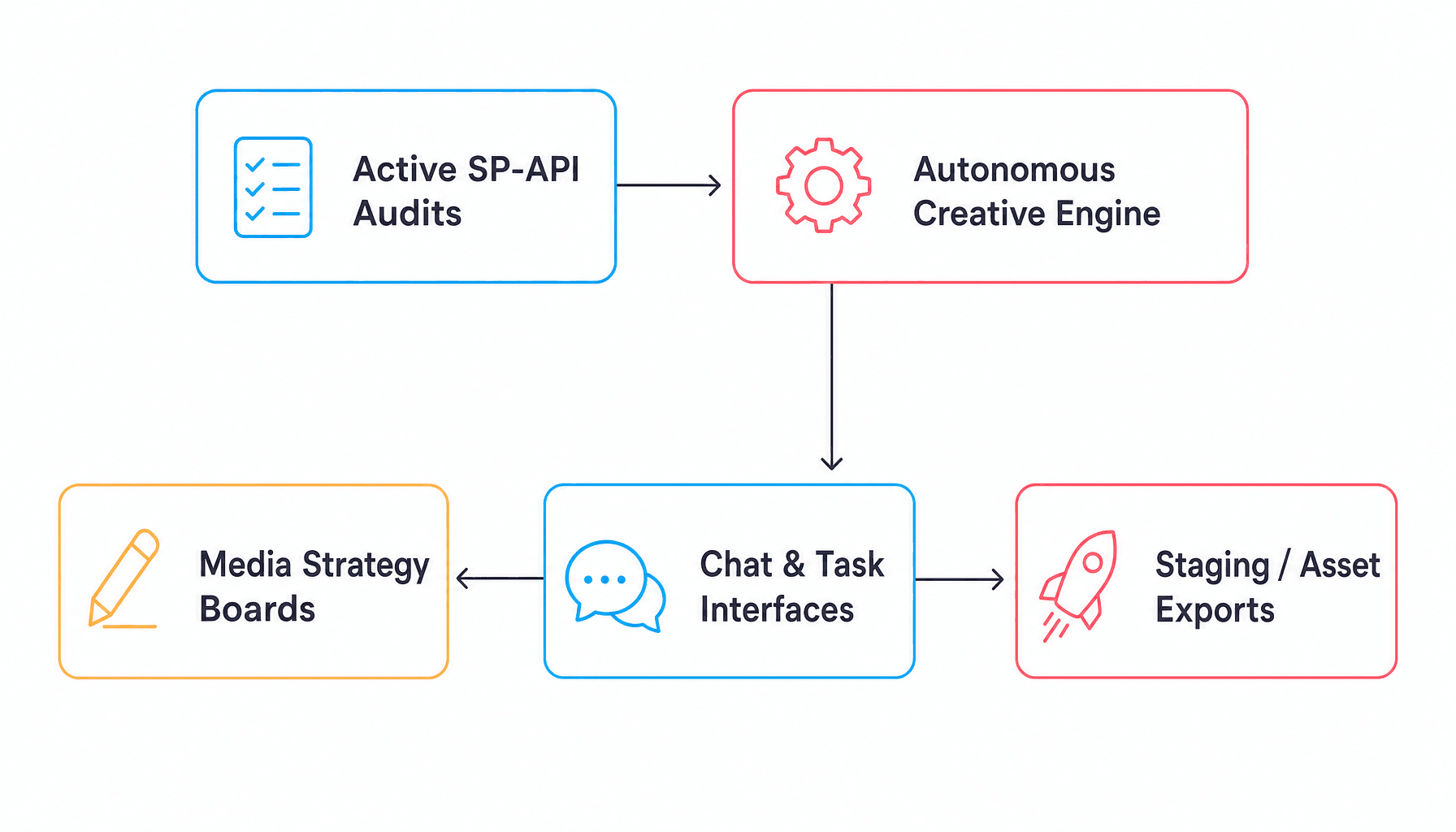
This integrated setup changes how teams update their digital storefronts. If a catalog manager needs to update a product line to target a new seasonal keyword or fresh customer feedback, they do not need to coordinate a multi-department creative project.
Instead, they can query the agent directly inside the chat workspace: "Optimize our top item's bullet points to emphasize holiday gifting features." The system processes recent search data, writes compliant, high-converting copy blocks, and stages the draft updates on the review board instantly. This rapid preparation allows operators to review the changes and update their active store listings within minutes.
Coordinating Creative Assets Across System Interfaces
The Listing and Creative skill functions across the platform's three primary interface environments to ensure consistent control over your brand image:
In the Conversational Chat: Teams can request quick copy revisions, generate new lifestyle image concepts, or run instant readiness checks using simple language commands, avoiding manual creative bottlenecks.
On the Turnkey Dashboards: A clean, default metrics view summarizes your overall listing optimization scores, active image compliance statuses, and high-priority optimization tasks without confusing technical jargon.
Through Scheduled Tasks: The automated task manager runs regular catalog scans and weekly listing health audits, staging optimization recommendations directly on your connected team dashboards so your brand specialists can easily push updates live.
Frequently Asked Questions
Can the agent push updated text and images directly to my live Amazon store?
No. To maintain complete brand safety and account security, the agent does not push copy alterations or image modifications directly to live listings without human review. The system generates, formats, and stages all proposed assets within a secure staging dashboard, keeping final publishing under the complete control of your team.
How does the image engine ensure generated graphics look realistic?
The system uses advanced computer-vision and structural positioning models that lock your physical product's precise shape, dimensions, and branding labels into the render frame. It only modifies the surrounding environment, lighting models, and background elements, keeping your product looking accurate and professional.
Does the system support automated translation for international storefronts?
Yes. The natural-language processing engine translates and adapts listing text for global Amazon marketplaces. It avoids basic literal translations, rewriting copy to incorporate localized search terms, idiomatic consumer phrasing, and regional marketplace compliance rules.
What happens if Amazon flags an auto-generated image or copy block?
The agent includes strict policy guardrails built from active Amazon style guides and restricted keyword lists. It screens all generated text and imagery for compliance flags before showing them to your team, minimizing the risk of account notifications or listing suppressions.
How long does it take for listing updates to show improvements in search placement?
Text updates, keyword additions, and structural copy modifications typically register within Amazon's indexing search systems within 48 hours of publishing. Visual changes, like updated lifestyle imagery or fresh A+ Content layouts, usually impact customer conversion percentages over a standard two-to-four week data collection window.

Co-Founder & CEO, Lumian
Robin Lobo is Co-Founder and CEO of Lumian. He built and sold a seven-figure eyeglasses brand on Amazon and spent several years on the client side of traditional agencies before founding Lumian, an AI-native Amazon agency backed by $3M led by Bowery Capital.