The Hidden Cost of FBA Stockouts: How to Build an Unshakeable Amazon Demand Forecasting Model
Discover the hidden operational and algorithmic costs of Amazon FBA stockouts. Learn how an inventory-aware, predictive demand forecasting model protects your organic rank and TACoS.

TL;DR
What to Expect:
An executive-level analysis exposing the deep algorithmic and financial damage caused by Amazon FBA stockouts.
This guide provides a strategic blueprint to move your brand from reactive spreadsheet planning to a predictive, inventory-aware demand forecasting model.
Key Takeaways:
Stockouts incur heavy downstream algorithmic penalties from Amazon’s A9/A10 engine, slashing organic keyword ranking and driving up long-term customer acquisition costs.
Relying on simple historical averages fails to account for supply chain disruptions, promotional feedback loops, and lead time variations.
Building an unshakeable forecasting infrastructure requires integrating sales velocity, marketing pipelines, and live logistics timelines into a closed-loop automated framework.
Intro
For enterprise e-commerce brands navigating the Amazon marketplace, maintaining inventory balance is an ongoing operational battle. When inventory levels slip into a complete stockout, traditional retail accounting registers the damage as a straightforward loss of immediate revenue - calculated simply as missed daily units multiplied by retail unit price. While this surface-level math is clear, it severely underestimates the true structural damage.
The true threat of a fulfillment breakdown lies in the hidden, downstream algorithmic penalties applied by Amazon's search engine infrastructure.
When a high-volume ASIN goes out of stock, its organic sales velocity drops to zero instantly. Amazon's indexing models prioritize consistent conversion history above almost all other performance metrics. As a result, even a brief structural pause in availability can lead to a swift downgrade in organic search rankings.
Reclaiming your original digital shelf position once inventory is restocked requires significant capital reinvestment. This reality makes reactive, spreadsheet-based demand planning a major financial liability. Protecting your margins and supporting sustainable growth requires a predictive, closed-loop demand forecasting infrastructure.
The Mathematical Breakdown of Stockout Penalties
Relying on manual spreadsheets often causes brands to overlook the compounding costs of an out-of-stock event. The financial impact of an FBA stockout is divided into two distinct components: immediate margin loss and long-term algorithmic recovery expenses.
Immediate Capital Disruption
During an active stockout, your fixed operational expenses continue to accumulate. Simultaneously, any multi-channel marketing campaigns or off-platform traffic funnels continue to direct premium consumers to an unfulfillable listing, creating immediate inefficiencies in your marketing spend.
Algorithmic Positioning Degradation
Amazon's A10 search engine maximizes revenue per glance view. When your buy box ownership disappears due to an out-of-stock flag, the algorithm quickly reallocates premium organic real estate to active competitors who demonstrate steady fulfillment consistency.
Data indicates that reclaiming lost keyword rankings after an extended stockout can require weeks of aggressive promotional campaigns. Brands are often forced to run low-margin, high-bid Sponsored Products initiatives just to rebuild historical sales velocity. This reactive spending drives up your Total Advertising Cost of Sales (TACoS) and strains your profitability long after your replacement inventory arrives at FBA fulfillment centers.
Why Traditional Forecasting Models Fail Scaling Brands
Many internal brand management teams still calculate future purchase orders by extracting historical sales volumes from Amazon Brand Analytics and applying a flat year-over-year growth multiplier. While this simple approach can work in a stable environment, it fails to account for three major marketplace realities:
Isolated Marketing Intentions: Traditional supply chain projections rarely factor in upcoming advertising strategies. If your PPC team plans to scale up aggressive top-of-funnel keyword bidding, a forecasting model built solely on past organic data will consistently underestimate real-time consumer demand.
Variable Supplier Lead Times: Supply chains are inherently volatile. Relying on fixed, unadjusted manufacturing and shipping schedules leaves your business vulnerable to transit delays and customs bottlenecks.
Promotional Data Distortion: Raw historical data files treat short-term promotional sales spikes - such as Prime Day volume or flash lightning deals - as consistent baseline consumer interest. If these traffic anomalies are not isolated and normalized, your models will over-predict baseline inventory needs, tying up critical capital in excess warehouse stock.
Relying on fragmented, backward-looking metrics prevents teams from identifying upcoming operational risks until after the catalog has already suffered a disruption.
The 4-Step Blueprint for Predictive Demand Modeling
Building a reliable, unshakeable forecasting model requires breaking down data silos. Your front-end marketing velocity, active advertising pipelines, and back-end fulfillment timelines must be consolidated into a single operational framework.
1. Establish Continuous, Multi-Channel Data Streams
An advanced data infrastructure eliminates manual entry by connecting directly with Amazon's Selling Partner API (SP-API). By pulling clean, hourly data updates across sales volume, buy-box ownership, competitor coupon adjustments, and current FBA inventory levels, your models can evaluate performance using live marketplace indicators.
2. Isolate and Normalize Velocity Fluctuations
To build an accurate demand baseline, your analysis must separate consistent everyday consumer interest from short-term anomalies. Your forecasting models should automatically flag and isolate artificial sales volume spikes caused by major seasonal promotions, extreme pricing adjustments, or temporary competitor stockouts.
3. Build Flexible Lead Time and Safety Stock Modifiers
Your replenishment parameters must adjust dynamically based on real-world shipping performance. Rather than using fixed transit assumptions, your system should track historical supplier performance, manufacturing variations, and FBA check-in lag. This data allows you to dynamically adjust your safety stock buffers, protecting your listings against unexpected supply chain delays without accumulating excess inventory.
4. Implement Inventory-Aware Advertising Guardrails
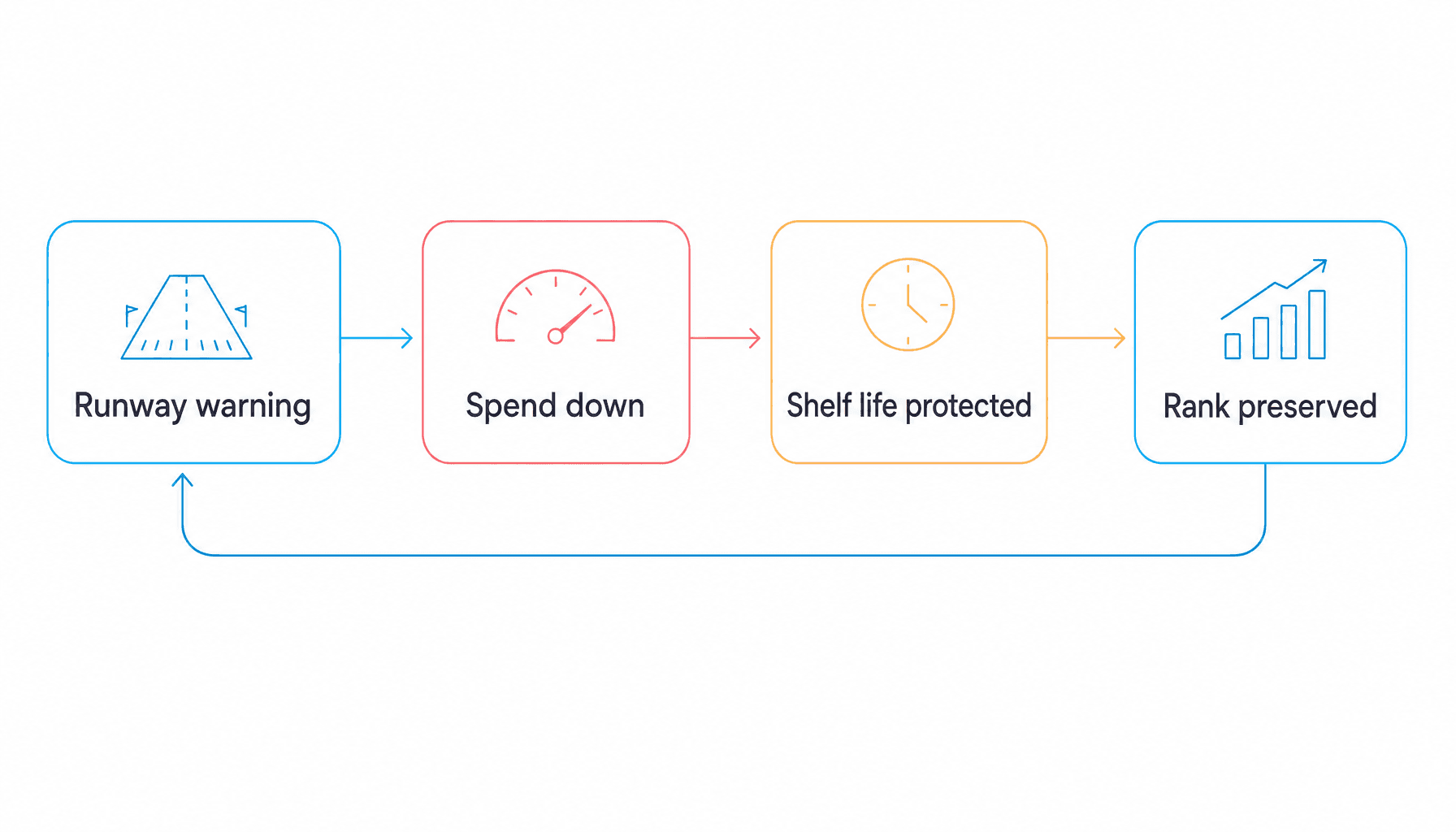
Your advertising spend must adapt automatically to your actual inventory runway. When your data infrastructure flags an impending restock risk due to transport bottlenecks, your advertising systems should respond immediately. By lowering bids on high-cost, promotional keywords, the system cools demand just enough to extend your remaining inventory, helping you avoid an early stockout while preserving your long-term organic search positions.
Transitioning to Automated, Closed-Loop Execution
The fast pace of modern digital marketplaces moves much faster than traditional weekly or monthly operational reviews can manage. If your team relies on manual spreadsheet updates to calculate reorder points or spot listing anomalies, your profit margins remain exposed to costly human latency.
Deploying predictive, inventory-aware automation removes this diagnostic delay entirely. Integrated e-commerce platforms monitor your global footprint around the clock, matching live consumer demand patterns with real-time supply chain capacity every 15 to 30 minutes.
When your operations utilize autonomous AI agents, your team shifts away from manual tracking and focuses entirely on high-level growth strategy. The platform automatically handles repetitive tasks like calculating economic order quantities, tracking buy-box compliance, and modifying keyword bids based on stock positions. This intelligent automation cuts out operational bottlenecks, reduces manual errors, and provides your enterprise brand with a scalable foundation for long-term growth.
Frequently Asked Questions
How do Amazon FBA stockouts impact my long-term organic keyword rankings?
Amazon's search engine prioritizes listings with a history of consistent conversions and steady sales velocity. When an item stocks out and its buy box availability drops to zero, the algorithm quickly reallocates premium organic real estate to active competitors, forcing you to use expensive, low-margin ad spend to rebuild your position once inventory is restocked.
Why are historical sales averages unreliable for building a demand forecasting model?
Historical averages look backward and fail to account for upcoming advertising campaigns, changes in supplier lead times, or competitor activities. Additionally, raw historical data often treats temporary sales spikes from major promotional events as baseline demand, which can lead to over-ordering and excess inventory.
What is inventory-aware bidding, and how does it protect my brand’s profit margins?
Inventory-aware bidding links your active advertising campaigns directly to live warehouse stock levels. When an upcoming stock shortage is identified, the system automatically lowers bids on high-cost promotional keywords to slow sales velocity, extending your inventory runway and helping you avoid a complete stockout.
How does automated root-cause analysis improve inventory forecasting accuracy?
Automated root-cause analysis evaluates your entire catalog data loop simultaneously, instantly connecting performance changes to specific operational events like listing suppressions, pricing adjustments, or category shifts. This precise tracking helps prevent short-term disruptions from distorting your long-term demand models.
Co-Founder & CEO, Lumian
Robin Lobo is Co-Founder and CEO of Lumian. He built and sold a seven-figure eyeglasses brand on Amazon and spent several years on the client side of traditional agencies before founding Lumian, an AI-native Amazon agency backed by $3M led by Bowery Capital.

AI Agent
Your Amazon business, fully managed.

Brand ManAger

Expert Team
The Hidden Cost of FBA Stockouts: How to Build an Unshakeable Amazon Demand Forecasting Model
Discover the hidden operational and algorithmic costs of Amazon FBA stockouts. Learn how an inventory-aware, predictive demand forecasting model protects your organic rank and TACoS.
TL;DR
What to Expect:
An executive-level analysis exposing the deep algorithmic and financial damage caused by Amazon FBA stockouts.
This guide provides a strategic blueprint to move your brand from reactive spreadsheet planning to a predictive, inventory-aware demand forecasting model.
Key Takeaways:
Stockouts incur heavy downstream algorithmic penalties from Amazon’s A9/A10 engine, slashing organic keyword ranking and driving up long-term customer acquisition costs.
Relying on simple historical averages fails to account for supply chain disruptions, promotional feedback loops, and lead time variations.
Building an unshakeable forecasting infrastructure requires integrating sales velocity, marketing pipelines, and live logistics timelines into a closed-loop automated framework.
Intro
For enterprise e-commerce brands navigating the Amazon marketplace, maintaining inventory balance is an ongoing operational battle. When inventory levels slip into a complete stockout, traditional retail accounting registers the damage as a straightforward loss of immediate revenue - calculated simply as missed daily units multiplied by retail unit price. While this surface-level math is clear, it severely underestimates the true structural damage.
The true threat of a fulfillment breakdown lies in the hidden, downstream algorithmic penalties applied by Amazon's search engine infrastructure.
When a high-volume ASIN goes out of stock, its organic sales velocity drops to zero instantly. Amazon's indexing models prioritize consistent conversion history above almost all other performance metrics. As a result, even a brief structural pause in availability can lead to a swift downgrade in organic search rankings.
Reclaiming your original digital shelf position once inventory is restocked requires significant capital reinvestment. This reality makes reactive, spreadsheet-based demand planning a major financial liability. Protecting your margins and supporting sustainable growth requires a predictive, closed-loop demand forecasting infrastructure.
The Mathematical Breakdown of Stockout Penalties
Relying on manual spreadsheets often causes brands to overlook the compounding costs of an out-of-stock event. The financial impact of an FBA stockout is divided into two distinct components: immediate margin loss and long-term algorithmic recovery expenses.
Immediate Capital Disruption
During an active stockout, your fixed operational expenses continue to accumulate. Simultaneously, any multi-channel marketing campaigns or off-platform traffic funnels continue to direct premium consumers to an unfulfillable listing, creating immediate inefficiencies in your marketing spend.
Algorithmic Positioning Degradation
Amazon's A10 search engine maximizes revenue per glance view. When your buy box ownership disappears due to an out-of-stock flag, the algorithm quickly reallocates premium organic real estate to active competitors who demonstrate steady fulfillment consistency.
Data indicates that reclaiming lost keyword rankings after an extended stockout can require weeks of aggressive promotional campaigns. Brands are often forced to run low-margin, high-bid Sponsored Products initiatives just to rebuild historical sales velocity. This reactive spending drives up your Total Advertising Cost of Sales (TACoS) and strains your profitability long after your replacement inventory arrives at FBA fulfillment centers.
Why Traditional Forecasting Models Fail Scaling Brands
Many internal brand management teams still calculate future purchase orders by extracting historical sales volumes from Amazon Brand Analytics and applying a flat year-over-year growth multiplier. While this simple approach can work in a stable environment, it fails to account for three major marketplace realities:
Isolated Marketing Intentions: Traditional supply chain projections rarely factor in upcoming advertising strategies. If your PPC team plans to scale up aggressive top-of-funnel keyword bidding, a forecasting model built solely on past organic data will consistently underestimate real-time consumer demand.
Variable Supplier Lead Times: Supply chains are inherently volatile. Relying on fixed, unadjusted manufacturing and shipping schedules leaves your business vulnerable to transit delays and customs bottlenecks.
Promotional Data Distortion: Raw historical data files treat short-term promotional sales spikes - such as Prime Day volume or flash lightning deals - as consistent baseline consumer interest. If these traffic anomalies are not isolated and normalized, your models will over-predict baseline inventory needs, tying up critical capital in excess warehouse stock.
Relying on fragmented, backward-looking metrics prevents teams from identifying upcoming operational risks until after the catalog has already suffered a disruption.
The 4-Step Blueprint for Predictive Demand Modeling
Building a reliable, unshakeable forecasting model requires breaking down data silos. Your front-end marketing velocity, active advertising pipelines, and back-end fulfillment timelines must be consolidated into a single operational framework.
1. Establish Continuous, Multi-Channel Data Streams
An advanced data infrastructure eliminates manual entry by connecting directly with Amazon's Selling Partner API (SP-API). By pulling clean, hourly data updates across sales volume, buy-box ownership, competitor coupon adjustments, and current FBA inventory levels, your models can evaluate performance using live marketplace indicators.
2. Isolate and Normalize Velocity Fluctuations
To build an accurate demand baseline, your analysis must separate consistent everyday consumer interest from short-term anomalies. Your forecasting models should automatically flag and isolate artificial sales volume spikes caused by major seasonal promotions, extreme pricing adjustments, or temporary competitor stockouts.
3. Build Flexible Lead Time and Safety Stock Modifiers
Your replenishment parameters must adjust dynamically based on real-world shipping performance. Rather than using fixed transit assumptions, your system should track historical supplier performance, manufacturing variations, and FBA check-in lag. This data allows you to dynamically adjust your safety stock buffers, protecting your listings against unexpected supply chain delays without accumulating excess inventory.
4. Implement Inventory-Aware Advertising Guardrails
Your advertising spend must adapt automatically to your actual inventory runway. When your data infrastructure flags an impending restock risk due to transport bottlenecks, your advertising systems should respond immediately. By lowering bids on high-cost, promotional keywords, the system cools demand just enough to extend your remaining inventory, helping you avoid an early stockout while preserving your long-term organic search positions.
Transitioning to Automated, Closed-Loop Execution
The fast pace of modern digital marketplaces moves much faster than traditional weekly or monthly operational reviews can manage. If your team relies on manual spreadsheet updates to calculate reorder points or spot listing anomalies, your profit margins remain exposed to costly human latency.
Deploying predictive, inventory-aware automation removes this diagnostic delay entirely. Integrated e-commerce platforms monitor your global footprint around the clock, matching live consumer demand patterns with real-time supply chain capacity every 15 to 30 minutes.
When your operations utilize autonomous AI agents, your team shifts away from manual tracking and focuses entirely on high-level growth strategy. The platform automatically handles repetitive tasks like calculating economic order quantities, tracking buy-box compliance, and modifying keyword bids based on stock positions. This intelligent automation cuts out operational bottlenecks, reduces manual errors, and provides your enterprise brand with a scalable foundation for long-term growth.
Frequently Asked Questions
How do Amazon FBA stockouts impact my long-term organic keyword rankings?
Amazon's search engine prioritizes listings with a history of consistent conversions and steady sales velocity. When an item stocks out and its buy box availability drops to zero, the algorithm quickly reallocates premium organic real estate to active competitors, forcing you to use expensive, low-margin ad spend to rebuild your position once inventory is restocked.
Why are historical sales averages unreliable for building a demand forecasting model?
Historical averages look backward and fail to account for upcoming advertising campaigns, changes in supplier lead times, or competitor activities. Additionally, raw historical data often treats temporary sales spikes from major promotional events as baseline demand, which can lead to over-ordering and excess inventory.
What is inventory-aware bidding, and how does it protect my brand’s profit margins?
Inventory-aware bidding links your active advertising campaigns directly to live warehouse stock levels. When an upcoming stock shortage is identified, the system automatically lowers bids on high-cost promotional keywords to slow sales velocity, extending your inventory runway and helping you avoid a complete stockout.
How does automated root-cause analysis improve inventory forecasting accuracy?
Automated root-cause analysis evaluates your entire catalog data loop simultaneously, instantly connecting performance changes to specific operational events like listing suppressions, pricing adjustments, or category shifts. This precise tracking helps prevent short-term disruptions from distorting your long-term demand models.
Co-Founder & CEO, Lumian
Robin Lobo is Co-Founder and CEO of Lumian. He built and sold a seven-figure eyeglasses brand on Amazon and spent several years on the client side of traditional agencies before founding Lumian, an AI-native Amazon agency backed by $3M led by Bowery Capital.
AI Agent
Your Amazon business, fully managed.
Brand ManAger
Expert Team
The Hidden Cost of FBA Stockouts: How to Build an Unshakeable Amazon Demand Forecasting Model
Discover the hidden operational and algorithmic costs of Amazon FBA stockouts. Learn how an inventory-aware, predictive demand forecasting model protects your organic rank and TACoS.
TL;DR
What to Expect:
An executive-level analysis exposing the deep algorithmic and financial damage caused by Amazon FBA stockouts.
This guide provides a strategic blueprint to move your brand from reactive spreadsheet planning to a predictive, inventory-aware demand forecasting model.
Key Takeaways:
Stockouts incur heavy downstream algorithmic penalties from Amazon’s A9/A10 engine, slashing organic keyword ranking and driving up long-term customer acquisition costs.
Relying on simple historical averages fails to account for supply chain disruptions, promotional feedback loops, and lead time variations.
Building an unshakeable forecasting infrastructure requires integrating sales velocity, marketing pipelines, and live logistics timelines into a closed-loop automated framework.
Intro
For enterprise e-commerce brands navigating the Amazon marketplace, maintaining inventory balance is an ongoing operational battle. When inventory levels slip into a complete stockout, traditional retail accounting registers the damage as a straightforward loss of immediate revenue - calculated simply as missed daily units multiplied by retail unit price. While this surface-level math is clear, it severely underestimates the true structural damage.
The true threat of a fulfillment breakdown lies in the hidden, downstream algorithmic penalties applied by Amazon's search engine infrastructure.
When a high-volume ASIN goes out of stock, its organic sales velocity drops to zero instantly. Amazon's indexing models prioritize consistent conversion history above almost all other performance metrics. As a result, even a brief structural pause in availability can lead to a swift downgrade in organic search rankings.
Reclaiming your original digital shelf position once inventory is restocked requires significant capital reinvestment. This reality makes reactive, spreadsheet-based demand planning a major financial liability. Protecting your margins and supporting sustainable growth requires a predictive, closed-loop demand forecasting infrastructure.
The Mathematical Breakdown of Stockout Penalties
Relying on manual spreadsheets often causes brands to overlook the compounding costs of an out-of-stock event. The financial impact of an FBA stockout is divided into two distinct components: immediate margin loss and long-term algorithmic recovery expenses.
Immediate Capital Disruption
During an active stockout, your fixed operational expenses continue to accumulate. Simultaneously, any multi-channel marketing campaigns or off-platform traffic funnels continue to direct premium consumers to an unfulfillable listing, creating immediate inefficiencies in your marketing spend.
Algorithmic Positioning Degradation
Amazon's A10 search engine maximizes revenue per glance view. When your buy box ownership disappears due to an out-of-stock flag, the algorithm quickly reallocates premium organic real estate to active competitors who demonstrate steady fulfillment consistency.
Data indicates that reclaiming lost keyword rankings after an extended stockout can require weeks of aggressive promotional campaigns. Brands are often forced to run low-margin, high-bid Sponsored Products initiatives just to rebuild historical sales velocity. This reactive spending drives up your Total Advertising Cost of Sales (TACoS) and strains your profitability long after your replacement inventory arrives at FBA fulfillment centers.
Why Traditional Forecasting Models Fail Scaling Brands
Many internal brand management teams still calculate future purchase orders by extracting historical sales volumes from Amazon Brand Analytics and applying a flat year-over-year growth multiplier. While this simple approach can work in a stable environment, it fails to account for three major marketplace realities:
Isolated Marketing Intentions: Traditional supply chain projections rarely factor in upcoming advertising strategies. If your PPC team plans to scale up aggressive top-of-funnel keyword bidding, a forecasting model built solely on past organic data will consistently underestimate real-time consumer demand.
Variable Supplier Lead Times: Supply chains are inherently volatile. Relying on fixed, unadjusted manufacturing and shipping schedules leaves your business vulnerable to transit delays and customs bottlenecks.
Promotional Data Distortion: Raw historical data files treat short-term promotional sales spikes - such as Prime Day volume or flash lightning deals - as consistent baseline consumer interest. If these traffic anomalies are not isolated and normalized, your models will over-predict baseline inventory needs, tying up critical capital in excess warehouse stock.
Relying on fragmented, backward-looking metrics prevents teams from identifying upcoming operational risks until after the catalog has already suffered a disruption.
The 4-Step Blueprint for Predictive Demand Modeling
Building a reliable, unshakeable forecasting model requires breaking down data silos. Your front-end marketing velocity, active advertising pipelines, and back-end fulfillment timelines must be consolidated into a single operational framework.
1. Establish Continuous, Multi-Channel Data Streams
An advanced data infrastructure eliminates manual entry by connecting directly with Amazon's Selling Partner API (SP-API). By pulling clean, hourly data updates across sales volume, buy-box ownership, competitor coupon adjustments, and current FBA inventory levels, your models can evaluate performance using live marketplace indicators.
2. Isolate and Normalize Velocity Fluctuations
To build an accurate demand baseline, your analysis must separate consistent everyday consumer interest from short-term anomalies. Your forecasting models should automatically flag and isolate artificial sales volume spikes caused by major seasonal promotions, extreme pricing adjustments, or temporary competitor stockouts.
3. Build Flexible Lead Time and Safety Stock Modifiers
Your replenishment parameters must adjust dynamically based on real-world shipping performance. Rather than using fixed transit assumptions, your system should track historical supplier performance, manufacturing variations, and FBA check-in lag. This data allows you to dynamically adjust your safety stock buffers, protecting your listings against unexpected supply chain delays without accumulating excess inventory.
4. Implement Inventory-Aware Advertising Guardrails
Your advertising spend must adapt automatically to your actual inventory runway. When your data infrastructure flags an impending restock risk due to transport bottlenecks, your advertising systems should respond immediately. By lowering bids on high-cost, promotional keywords, the system cools demand just enough to extend your remaining inventory, helping you avoid an early stockout while preserving your long-term organic search positions.
Transitioning to Automated, Closed-Loop Execution
The fast pace of modern digital marketplaces moves much faster than traditional weekly or monthly operational reviews can manage. If your team relies on manual spreadsheet updates to calculate reorder points or spot listing anomalies, your profit margins remain exposed to costly human latency.
Deploying predictive, inventory-aware automation removes this diagnostic delay entirely. Integrated e-commerce platforms monitor your global footprint around the clock, matching live consumer demand patterns with real-time supply chain capacity every 15 to 30 minutes.
When your operations utilize autonomous AI agents, your team shifts away from manual tracking and focuses entirely on high-level growth strategy. The platform automatically handles repetitive tasks like calculating economic order quantities, tracking buy-box compliance, and modifying keyword bids based on stock positions. This intelligent automation cuts out operational bottlenecks, reduces manual errors, and provides your enterprise brand with a scalable foundation for long-term growth.
Frequently Asked Questions
How do Amazon FBA stockouts impact my long-term organic keyword rankings?
Amazon's search engine prioritizes listings with a history of consistent conversions and steady sales velocity. When an item stocks out and its buy box availability drops to zero, the algorithm quickly reallocates premium organic real estate to active competitors, forcing you to use expensive, low-margin ad spend to rebuild your position once inventory is restocked.
Why are historical sales averages unreliable for building a demand forecasting model?
Historical averages look backward and fail to account for upcoming advertising campaigns, changes in supplier lead times, or competitor activities. Additionally, raw historical data often treats temporary sales spikes from major promotional events as baseline demand, which can lead to over-ordering and excess inventory.
What is inventory-aware bidding, and how does it protect my brand’s profit margins?
Inventory-aware bidding links your active advertising campaigns directly to live warehouse stock levels. When an upcoming stock shortage is identified, the system automatically lowers bids on high-cost promotional keywords to slow sales velocity, extending your inventory runway and helping you avoid a complete stockout.
How does automated root-cause analysis improve inventory forecasting accuracy?
Automated root-cause analysis evaluates your entire catalog data loop simultaneously, instantly connecting performance changes to specific operational events like listing suppressions, pricing adjustments, or category shifts. This precise tracking helps prevent short-term disruptions from distorting your long-term demand models.
Co-Founder & CEO, Lumian
Robin Lobo is Co-Founder and CEO of Lumian. He built and sold a seven-figure eyeglasses brand on Amazon and spent several years on the client side of traditional agencies before founding Lumian, an AI-native Amazon agency backed by $3M led by Bowery Capital.

AI Agent
Your Amazon business, fully managed.
Brand ManAger
Expert Team