Amazon FBA Reimbursement Audit Guide 2026: Recover Lost Capital
Learn how Amazon's updated FBA reimbursement policies affect your net margins. Discover how to identify warehouse discrepancies and build audit logs before short windows expire.

TL;DR
What to expect from this article:
An objective evaluation of modern inventory reconciliation within the Amazon Fulfillment by Amazon (FBA) ecosystem. This guide details how recent marketplace changes affect capital recovery, identifies major warehouse inventory discrepancy categories, and provides a framework for systematic auditing.
Key Takeaways:
Amazon's updated operational guidelines restrict manual fulfillment center claim windows to 60 days, requiring continuous account tracking to prevent capital expiration.
The marketplace has shifted to a sourcing-based reimbursement model, calculating recovery credits from product manufacturing costs rather than retail list prices.
Deploying automated auditing architectures enables brands to identify discrepancies, cross-reference inventory ledgers, and build ready-to-submit verification packages without manual data entry.
Intro
Scaling an e-commerce operation using Fulfillment by Amazon provides major distribution benefits, but outsourcing logistics to global warehouse networks introduces significant inventory tracking complexities. Product stock moves constantly across regional sorting hubs, fulfillment centers, and return processing points. Within this multi-stage supply chain, structural variances routinely occur, resulting in missing inbound stock, warehouse damage, or customer refunds that lack physical returns.
While Amazon maintains automated recovery checks for obvious errors, independent industry assessments indicate that thousands of dollars in hidden transactional errors slip through native filters annually. For high-volume private-label brands and retail groups, ignoring these errors directly reduces cash flow and contribution margins. This guide explores the technical mechanics of FBA inventory auditing, detailing how recent structural updates impact cash flow recovery and how to build accurate dispute workflows to secure your company's capital.
The Strategic Shift in Amazon's Financial Recovery Policy
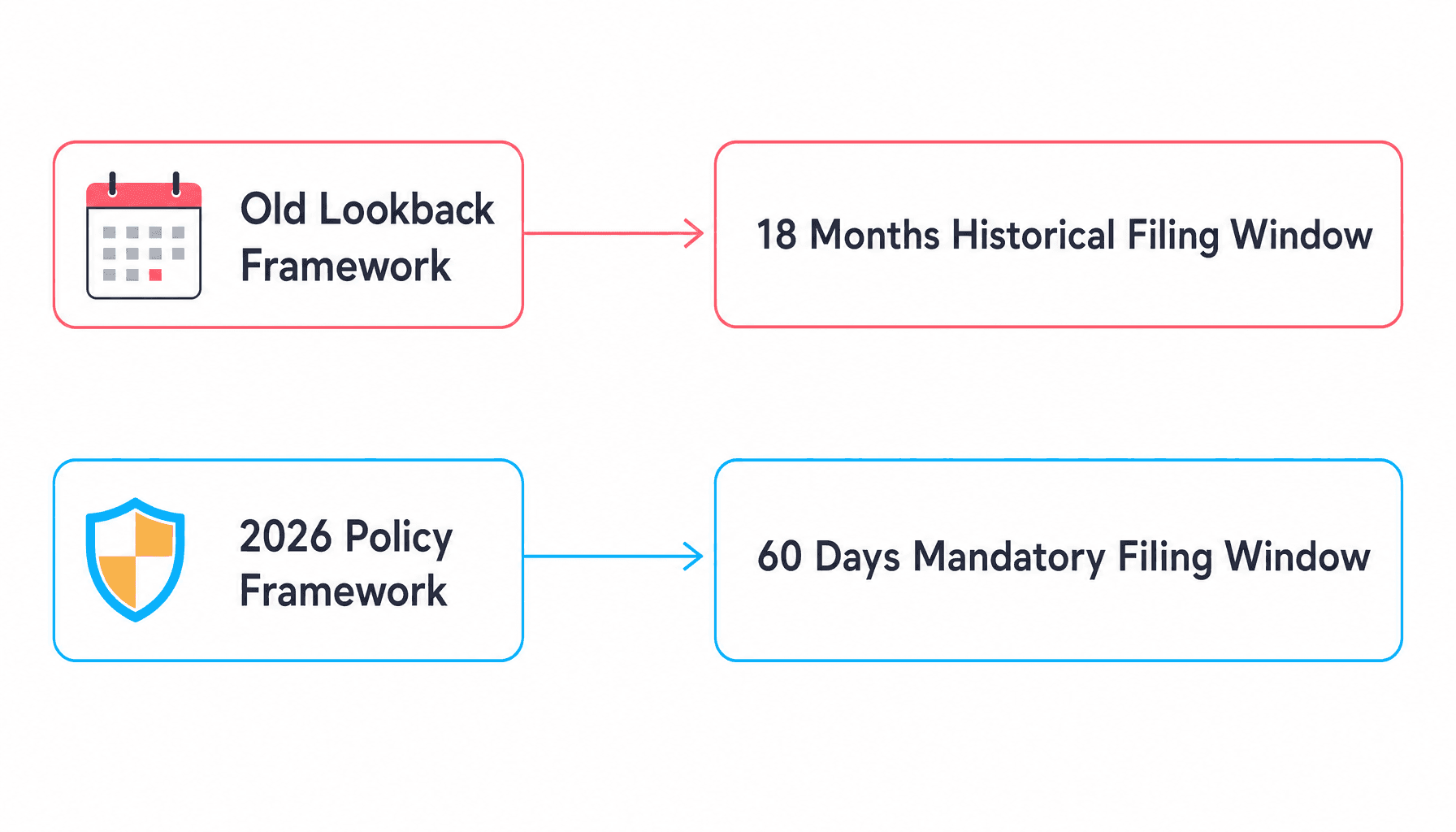
Reconciling inventory errors has become a time-sensitive operational requirement due to major regulatory adjustments made within Seller Central. Historically, Amazon granted e-commerce businesses up to 18 months to identify inventory tracking issues and submit retroactive reimbursement claims.
This long review period allowed brands to run manual audits once or twice a year without losing eligible funds. However, updated FBA policies have shortened the manual lookback window significantly. Under current operational rules, claims for inventory lost or damaged within fulfillment centers must be filed no later than 60 days from the initial incident date. This change cuts the available response window by over 80 percent, meaning that tracking errors on a quarterly or bi-annual basis now results in permanent capital loss. The shortened claim windows took effect in late October 2024, and the sourcing-cost model followed in March 2025.
In addition to shortened timelines, Amazon changed its financial recovery calculation method by implementing a sourcing-based reimbursement model. Previously, when Amazon lost a product, it credited the seller based on the active retail listing price minus standard marketplace referral and fulfillment fees. The updated policy calculates credits from the product's actual manufacturing or sourcing cost for inventory lost or damaged before a customer order. Items lost or damaged after a customer order is placed are still reimbursed at the sales price minus applicable fees.
If a brand fails to input accurate sourcing costs through the Manage Your Sourcing Cost page in the Inventory Defect and Reimbursement (IDR) portal, Amazon applies its own internal estimates, which are typically lower. Consequently, a product that previously yielded a 40 dollar recovery credit may now only receive a 9 dollar credit based on its baseline landed cost. This structural shift requires brands to maintain perfect catalog records and establish precise, ongoing validation workflows to protect their cash flow.
Core Operational Discrepancy Categories to Monitor
To run an effective capital recovery audit, operations teams must track data across multiple inventory reports. Financial leaks generally occur within four primary operational areas:
1. Inbound Fulfillment Shortages
Discrepancies frequently occur during initial warehouse receiving operations. When a brand transfers a batch of inventory to an FBA hub, warehouse personnel can easily miscount or misplace arriving stock. If a shipping plan records 500 units sent but the inbound log closes at only 485 units, the missing 15 units represent unrecovered capital. Auditing these errors requires matching structural packing lists and signed carrier Bills of Lading against active receiving reports immediately after a shipment closes.
2. Warehouse Disappearance and Physical Damage
Products move frequently between different facility zones for optimization and storage management. During these internal transfers, items can be dropped, crushed, or misplaced within storage racks. Industry analyses consistently show that unclaimed FBA reimbursements amount to roughly 1 to 3 percent of annual revenue for the average seller, with inbound shipment and warehouse losses making up the largest share of claims. Sellers must monitor their Inventory Ledger reports closely to track "Lost - Warehouse" codes and verify that matching "Found" or credit offsets are applied within 30 days.
3. Customer Return Discrepancies
When a buyer initiates an Amazon return, the marketplace processes an immediate refund from the seller's account balance. If the buyer fails to return the physical product within 45 days of the refund, the seller becomes eligible to file a claim but customer return claims must be submitted within a defined window (60 to 120 days from the refund date), after which eligibility expires. If the customer fails to ship the item back or if the returned product is misplaced during warehouse check-in, the seller frequently remains out of pocket for both the product and the refund. Reconciling this loop requires cross-referencing customer return sheets directly against your active inventory history.
4. Categorization Fee Overcharges
Amazon calculates FBA fulfillment costs using product dimension and weight data stored in its catalog system. If a small packaging update or a systemic measurement error changes a product's recorded size tier, every subsequent order incurs an elevated fulfillment charge. Because these minor fee overcharges accumulate across thousands of customer orders, they can quietly drain thousands of dollars in net profits before being noticed.
Constructing an Automated, Compliant Dispute Strategy
Recovering missing capital requires transforming raw data reports into structured, verified dispute records. Many sellers make the mistake of using aggressive, automated third-party software that opens bulk support tickets using copied text templates. This approach directly violates Amazon’s terms of service and can lead to immediate account restrictions or permanent suspension of your reimbursement privileges.
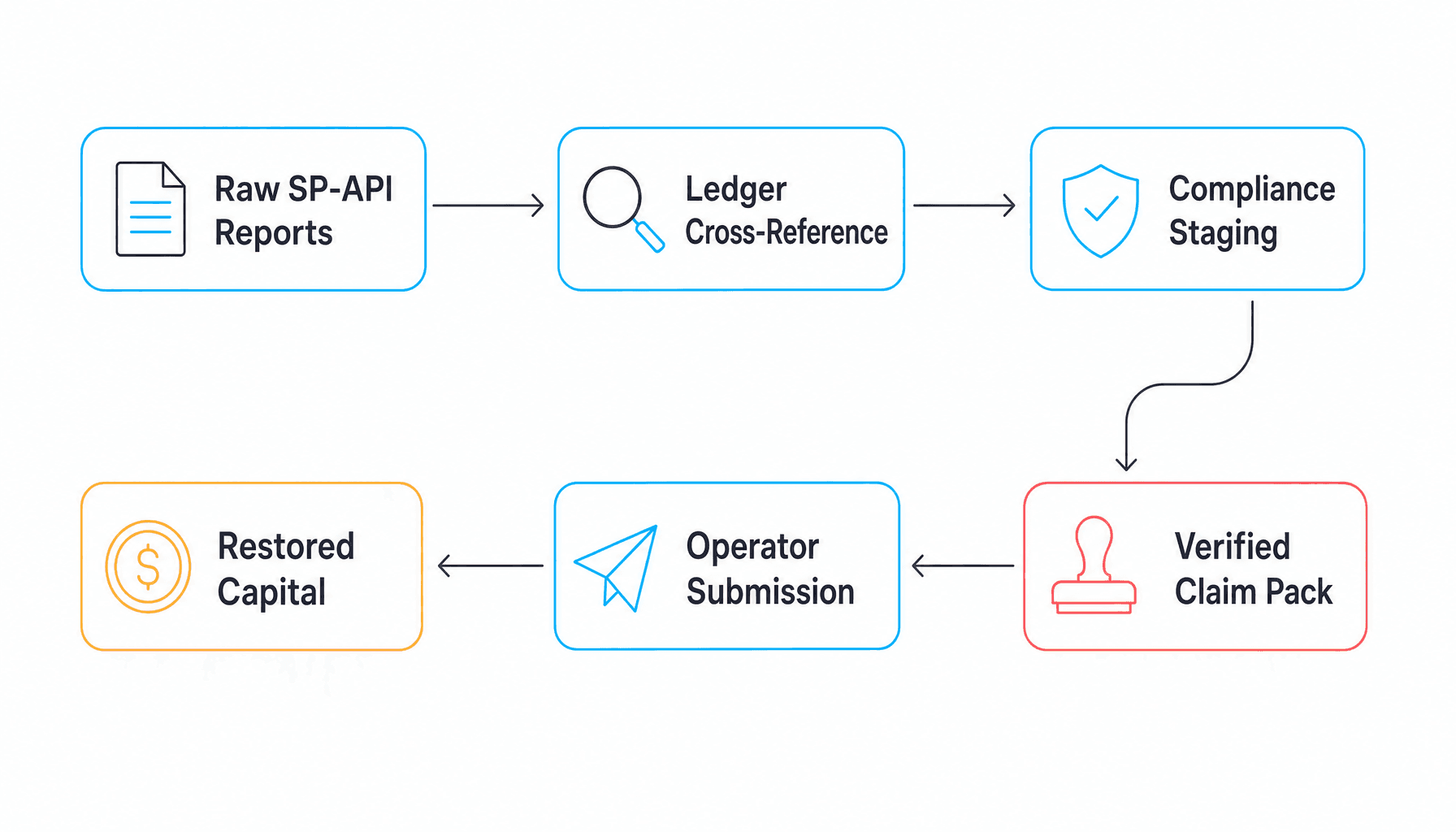
A secure, sustainable recovery strategy relies on automated data aggregation paired with manual human submission. The Money Back skill inside Lumian Agent utilizes this combined approach. By connecting directly to your store via secure Selling Partner API data streams, the agent cross-references inventory reconciliation reports, transaction tables, and receiving logs automatically in the background.
Instead of opening unverified support tickets, the system organizes its findings into a clean, verified dispute package containing the specific transaction IDs, ASINs, and tracking metrics required by Amazon. This preparation allows your team to review the details against internal supplier invoices and submit verified, policy-compliant claims through Seller Central within the mandatory 60 day window.
Integrating Capital Recovery Into Daily Brand Workflows
Managing financial recovery should be built directly into your core business operations. The Money Back skill coordinates data across the platform's three primary deployment interfaces:
In the Conversational Chat: System operators can check financial metrics instantly by asking questions like "What is our total open reimbursement value this week?" or "List the discrepancies found on inbound shipment plans." The agent extracts the relevant figures and presents a structured summary.
On the Turnkey Dashboards: A dedicated financial recovery module tracks historical credits, pending disputes, and open recovery opportunities categorized by error type, giving managers a clear view of recovery progress.
Through Scheduled Tasks: The agent can be set to run automated inventory audits every week. It monitors changes across your inventory ledgers, updates active recovery pipelines, and sends alerts to connected Slack channels when new dispute packages are ready for human review.
Frequently Asked Questions
How does the 2026 sourcing cost policy change impact my total recovery amounts?
Amazon's updated sourcing cost model calculates reimbursement credits from your product's manufacturing or buying cost rather than its retail list price. For high-margin products, this adjustment can reduce recovery amounts by 60 percent or more compared to the older sale-price model. To prevent further drops in recovery value, sellers must enter accurate sourcing cost figures for every active SKU through the Manage Your Sourcing Cost page in Seller Central's IDR portal.
Why do customer returns often create financial discrepancies for FBA sellers?
When a customer requests a return, Amazon processes an immediate refund using the seller's account funds. If the customer does not return the item within 45 days, or if the product is lost during warehouse check-in, the seller often remains debited for the refund. Regular audits are required to catch these uncredited returns and secure the funds owed to your business.
Can using an automated reimbursement tool cause my Amazon seller account to be suspended?
Using software that automatically submits mass cases or uses repetitive spam templates can lead to account suspensions for policy violations. To remain compliant, look for systems like Lumian Agent that use secure SP-API connections to parse data and build verified dispute packages, leaving final case submission and review under the control of a human operator.
What documents are required to resolve an inbound shipment shortage?
To resolve an inbound shipment shortage, Amazon typically requires official proof of inventory ownership, such as a manufacturer invoice or a signed packing slip, alongside a signed carrier Bill of Lading (BOL) or tracking delivery receipt. The agent gathers the necessary shipment IDs so your team can easily pair them with internal files.
How often should a high-volume brand audit its FBA inventory ledgers?
Because Amazon's manual claim windows are limited to 60 days for warehouse errors, high-volume brands should audit their inventory ledgers weekly or bi-weekly. Waiting longer to review reports can cause older discrepancies to cross the 60 day line, resulting in permanent capital loss.
Co-Founder & CEO, Lumian
Robin Lobo is Co-Founder and CEO of Lumian. He built and sold a seven-figure eyeglasses brand on Amazon and spent several years on the client side of traditional agencies before founding Lumian, an AI-native Amazon agency backed by $3M led by Bowery Capital.

AI Agent
Your Amazon business, fully managed.

Brand ManAger

Expert Team
Amazon FBA Reimbursement Audit Guide 2026: Recover Lost Capital
Learn how Amazon's updated FBA reimbursement policies affect your net margins. Discover how to identify warehouse discrepancies and build audit logs before short windows expire.
TL;DR
What to expect from this article:
An objective evaluation of modern inventory reconciliation within the Amazon Fulfillment by Amazon (FBA) ecosystem. This guide details how recent marketplace changes affect capital recovery, identifies major warehouse inventory discrepancy categories, and provides a framework for systematic auditing.
Key Takeaways:
Amazon's updated operational guidelines restrict manual fulfillment center claim windows to 60 days, requiring continuous account tracking to prevent capital expiration.
The marketplace has shifted to a sourcing-based reimbursement model, calculating recovery credits from product manufacturing costs rather than retail list prices.
Deploying automated auditing architectures enables brands to identify discrepancies, cross-reference inventory ledgers, and build ready-to-submit verification packages without manual data entry.
Intro
Scaling an e-commerce operation using Fulfillment by Amazon provides major distribution benefits, but outsourcing logistics to global warehouse networks introduces significant inventory tracking complexities. Product stock moves constantly across regional sorting hubs, fulfillment centers, and return processing points. Within this multi-stage supply chain, structural variances routinely occur, resulting in missing inbound stock, warehouse damage, or customer refunds that lack physical returns.
While Amazon maintains automated recovery checks for obvious errors, independent industry assessments indicate that thousands of dollars in hidden transactional errors slip through native filters annually. For high-volume private-label brands and retail groups, ignoring these errors directly reduces cash flow and contribution margins. This guide explores the technical mechanics of FBA inventory auditing, detailing how recent structural updates impact cash flow recovery and how to build accurate dispute workflows to secure your company's capital.
The Strategic Shift in Amazon's Financial Recovery Policy
Reconciling inventory errors has become a time-sensitive operational requirement due to major regulatory adjustments made within Seller Central. Historically, Amazon granted e-commerce businesses up to 18 months to identify inventory tracking issues and submit retroactive reimbursement claims.
This long review period allowed brands to run manual audits once or twice a year without losing eligible funds. However, updated FBA policies have shortened the manual lookback window significantly. Under current operational rules, claims for inventory lost or damaged within fulfillment centers must be filed no later than 60 days from the initial incident date. This change cuts the available response window by over 80 percent, meaning that tracking errors on a quarterly or bi-annual basis now results in permanent capital loss. The shortened claim windows took effect in late October 2024, and the sourcing-cost model followed in March 2025.
In addition to shortened timelines, Amazon changed its financial recovery calculation method by implementing a sourcing-based reimbursement model. Previously, when Amazon lost a product, it credited the seller based on the active retail listing price minus standard marketplace referral and fulfillment fees. The updated policy calculates credits from the product's actual manufacturing or sourcing cost for inventory lost or damaged before a customer order. Items lost or damaged after a customer order is placed are still reimbursed at the sales price minus applicable fees.
If a brand fails to input accurate sourcing costs through the Manage Your Sourcing Cost page in the Inventory Defect and Reimbursement (IDR) portal, Amazon applies its own internal estimates, which are typically lower. Consequently, a product that previously yielded a 40 dollar recovery credit may now only receive a 9 dollar credit based on its baseline landed cost. This structural shift requires brands to maintain perfect catalog records and establish precise, ongoing validation workflows to protect their cash flow.
Core Operational Discrepancy Categories to Monitor
To run an effective capital recovery audit, operations teams must track data across multiple inventory reports. Financial leaks generally occur within four primary operational areas:
1. Inbound Fulfillment Shortages
Discrepancies frequently occur during initial warehouse receiving operations. When a brand transfers a batch of inventory to an FBA hub, warehouse personnel can easily miscount or misplace arriving stock. If a shipping plan records 500 units sent but the inbound log closes at only 485 units, the missing 15 units represent unrecovered capital. Auditing these errors requires matching structural packing lists and signed carrier Bills of Lading against active receiving reports immediately after a shipment closes.
2. Warehouse Disappearance and Physical Damage
Products move frequently between different facility zones for optimization and storage management. During these internal transfers, items can be dropped, crushed, or misplaced within storage racks. Industry analyses consistently show that unclaimed FBA reimbursements amount to roughly 1 to 3 percent of annual revenue for the average seller, with inbound shipment and warehouse losses making up the largest share of claims. Sellers must monitor their Inventory Ledger reports closely to track "Lost - Warehouse" codes and verify that matching "Found" or credit offsets are applied within 30 days.
3. Customer Return Discrepancies
When a buyer initiates an Amazon return, the marketplace processes an immediate refund from the seller's account balance. If the buyer fails to return the physical product within 45 days of the refund, the seller becomes eligible to file a claim but customer return claims must be submitted within a defined window (60 to 120 days from the refund date), after which eligibility expires. If the customer fails to ship the item back or if the returned product is misplaced during warehouse check-in, the seller frequently remains out of pocket for both the product and the refund. Reconciling this loop requires cross-referencing customer return sheets directly against your active inventory history.
4. Categorization Fee Overcharges
Amazon calculates FBA fulfillment costs using product dimension and weight data stored in its catalog system. If a small packaging update or a systemic measurement error changes a product's recorded size tier, every subsequent order incurs an elevated fulfillment charge. Because these minor fee overcharges accumulate across thousands of customer orders, they can quietly drain thousands of dollars in net profits before being noticed.
Constructing an Automated, Compliant Dispute Strategy
Recovering missing capital requires transforming raw data reports into structured, verified dispute records. Many sellers make the mistake of using aggressive, automated third-party software that opens bulk support tickets using copied text templates. This approach directly violates Amazon’s terms of service and can lead to immediate account restrictions or permanent suspension of your reimbursement privileges.
A secure, sustainable recovery strategy relies on automated data aggregation paired with manual human submission. The Money Back skill inside Lumian Agent utilizes this combined approach. By connecting directly to your store via secure Selling Partner API data streams, the agent cross-references inventory reconciliation reports, transaction tables, and receiving logs automatically in the background.
Instead of opening unverified support tickets, the system organizes its findings into a clean, verified dispute package containing the specific transaction IDs, ASINs, and tracking metrics required by Amazon. This preparation allows your team to review the details against internal supplier invoices and submit verified, policy-compliant claims through Seller Central within the mandatory 60 day window.
Integrating Capital Recovery Into Daily Brand Workflows
Managing financial recovery should be built directly into your core business operations. The Money Back skill coordinates data across the platform's three primary deployment interfaces:
In the Conversational Chat: System operators can check financial metrics instantly by asking questions like "What is our total open reimbursement value this week?" or "List the discrepancies found on inbound shipment plans." The agent extracts the relevant figures and presents a structured summary.
On the Turnkey Dashboards: A dedicated financial recovery module tracks historical credits, pending disputes, and open recovery opportunities categorized by error type, giving managers a clear view of recovery progress.
Through Scheduled Tasks: The agent can be set to run automated inventory audits every week. It monitors changes across your inventory ledgers, updates active recovery pipelines, and sends alerts to connected Slack channels when new dispute packages are ready for human review.
Frequently Asked Questions
How does the 2026 sourcing cost policy change impact my total recovery amounts?
Amazon's updated sourcing cost model calculates reimbursement credits from your product's manufacturing or buying cost rather than its retail list price. For high-margin products, this adjustment can reduce recovery amounts by 60 percent or more compared to the older sale-price model. To prevent further drops in recovery value, sellers must enter accurate sourcing cost figures for every active SKU through the Manage Your Sourcing Cost page in Seller Central's IDR portal.
Why do customer returns often create financial discrepancies for FBA sellers?
When a customer requests a return, Amazon processes an immediate refund using the seller's account funds. If the customer does not return the item within 45 days, or if the product is lost during warehouse check-in, the seller often remains debited for the refund. Regular audits are required to catch these uncredited returns and secure the funds owed to your business.
Can using an automated reimbursement tool cause my Amazon seller account to be suspended?
Using software that automatically submits mass cases or uses repetitive spam templates can lead to account suspensions for policy violations. To remain compliant, look for systems like Lumian Agent that use secure SP-API connections to parse data and build verified dispute packages, leaving final case submission and review under the control of a human operator.
What documents are required to resolve an inbound shipment shortage?
To resolve an inbound shipment shortage, Amazon typically requires official proof of inventory ownership, such as a manufacturer invoice or a signed packing slip, alongside a signed carrier Bill of Lading (BOL) or tracking delivery receipt. The agent gathers the necessary shipment IDs so your team can easily pair them with internal files.
How often should a high-volume brand audit its FBA inventory ledgers?
Because Amazon's manual claim windows are limited to 60 days for warehouse errors, high-volume brands should audit their inventory ledgers weekly or bi-weekly. Waiting longer to review reports can cause older discrepancies to cross the 60 day line, resulting in permanent capital loss.
Co-Founder & CEO, Lumian
Robin Lobo is Co-Founder and CEO of Lumian. He built and sold a seven-figure eyeglasses brand on Amazon and spent several years on the client side of traditional agencies before founding Lumian, an AI-native Amazon agency backed by $3M led by Bowery Capital.
AI Agent
Your Amazon business, fully managed.
Brand ManAger
Expert Team
Amazon FBA Reimbursement Audit Guide 2026: Recover Lost Capital
Learn how Amazon's updated FBA reimbursement policies affect your net margins. Discover how to identify warehouse discrepancies and build audit logs before short windows expire.
TL;DR
What to expect from this article:
An objective evaluation of modern inventory reconciliation within the Amazon Fulfillment by Amazon (FBA) ecosystem. This guide details how recent marketplace changes affect capital recovery, identifies major warehouse inventory discrepancy categories, and provides a framework for systematic auditing.
Key Takeaways:
Amazon's updated operational guidelines restrict manual fulfillment center claim windows to 60 days, requiring continuous account tracking to prevent capital expiration.
The marketplace has shifted to a sourcing-based reimbursement model, calculating recovery credits from product manufacturing costs rather than retail list prices.
Deploying automated auditing architectures enables brands to identify discrepancies, cross-reference inventory ledgers, and build ready-to-submit verification packages without manual data entry.
Intro
Scaling an e-commerce operation using Fulfillment by Amazon provides major distribution benefits, but outsourcing logistics to global warehouse networks introduces significant inventory tracking complexities. Product stock moves constantly across regional sorting hubs, fulfillment centers, and return processing points. Within this multi-stage supply chain, structural variances routinely occur, resulting in missing inbound stock, warehouse damage, or customer refunds that lack physical returns.
While Amazon maintains automated recovery checks for obvious errors, independent industry assessments indicate that thousands of dollars in hidden transactional errors slip through native filters annually. For high-volume private-label brands and retail groups, ignoring these errors directly reduces cash flow and contribution margins. This guide explores the technical mechanics of FBA inventory auditing, detailing how recent structural updates impact cash flow recovery and how to build accurate dispute workflows to secure your company's capital.
The Strategic Shift in Amazon's Financial Recovery Policy
Reconciling inventory errors has become a time-sensitive operational requirement due to major regulatory adjustments made within Seller Central. Historically, Amazon granted e-commerce businesses up to 18 months to identify inventory tracking issues and submit retroactive reimbursement claims.
This long review period allowed brands to run manual audits once or twice a year without losing eligible funds. However, updated FBA policies have shortened the manual lookback window significantly. Under current operational rules, claims for inventory lost or damaged within fulfillment centers must be filed no later than 60 days from the initial incident date. This change cuts the available response window by over 80 percent, meaning that tracking errors on a quarterly or bi-annual basis now results in permanent capital loss. The shortened claim windows took effect in late October 2024, and the sourcing-cost model followed in March 2025.
In addition to shortened timelines, Amazon changed its financial recovery calculation method by implementing a sourcing-based reimbursement model. Previously, when Amazon lost a product, it credited the seller based on the active retail listing price minus standard marketplace referral and fulfillment fees. The updated policy calculates credits from the product's actual manufacturing or sourcing cost for inventory lost or damaged before a customer order. Items lost or damaged after a customer order is placed are still reimbursed at the sales price minus applicable fees.
If a brand fails to input accurate sourcing costs through the Manage Your Sourcing Cost page in the Inventory Defect and Reimbursement (IDR) portal, Amazon applies its own internal estimates, which are typically lower. Consequently, a product that previously yielded a 40 dollar recovery credit may now only receive a 9 dollar credit based on its baseline landed cost. This structural shift requires brands to maintain perfect catalog records and establish precise, ongoing validation workflows to protect their cash flow.
Core Operational Discrepancy Categories to Monitor
To run an effective capital recovery audit, operations teams must track data across multiple inventory reports. Financial leaks generally occur within four primary operational areas:
1. Inbound Fulfillment Shortages
Discrepancies frequently occur during initial warehouse receiving operations. When a brand transfers a batch of inventory to an FBA hub, warehouse personnel can easily miscount or misplace arriving stock. If a shipping plan records 500 units sent but the inbound log closes at only 485 units, the missing 15 units represent unrecovered capital. Auditing these errors requires matching structural packing lists and signed carrier Bills of Lading against active receiving reports immediately after a shipment closes.
2. Warehouse Disappearance and Physical Damage
Products move frequently between different facility zones for optimization and storage management. During these internal transfers, items can be dropped, crushed, or misplaced within storage racks. Industry analyses consistently show that unclaimed FBA reimbursements amount to roughly 1 to 3 percent of annual revenue for the average seller, with inbound shipment and warehouse losses making up the largest share of claims. Sellers must monitor their Inventory Ledger reports closely to track "Lost - Warehouse" codes and verify that matching "Found" or credit offsets are applied within 30 days.
3. Customer Return Discrepancies
When a buyer initiates an Amazon return, the marketplace processes an immediate refund from the seller's account balance. If the buyer fails to return the physical product within 45 days of the refund, the seller becomes eligible to file a claim but customer return claims must be submitted within a defined window (60 to 120 days from the refund date), after which eligibility expires. If the customer fails to ship the item back or if the returned product is misplaced during warehouse check-in, the seller frequently remains out of pocket for both the product and the refund. Reconciling this loop requires cross-referencing customer return sheets directly against your active inventory history.
4. Categorization Fee Overcharges
Amazon calculates FBA fulfillment costs using product dimension and weight data stored in its catalog system. If a small packaging update or a systemic measurement error changes a product's recorded size tier, every subsequent order incurs an elevated fulfillment charge. Because these minor fee overcharges accumulate across thousands of customer orders, they can quietly drain thousands of dollars in net profits before being noticed.
Constructing an Automated, Compliant Dispute Strategy
Recovering missing capital requires transforming raw data reports into structured, verified dispute records. Many sellers make the mistake of using aggressive, automated third-party software that opens bulk support tickets using copied text templates. This approach directly violates Amazon’s terms of service and can lead to immediate account restrictions or permanent suspension of your reimbursement privileges.
A secure, sustainable recovery strategy relies on automated data aggregation paired with manual human submission. The Money Back skill inside Lumian Agent utilizes this combined approach. By connecting directly to your store via secure Selling Partner API data streams, the agent cross-references inventory reconciliation reports, transaction tables, and receiving logs automatically in the background.
Instead of opening unverified support tickets, the system organizes its findings into a clean, verified dispute package containing the specific transaction IDs, ASINs, and tracking metrics required by Amazon. This preparation allows your team to review the details against internal supplier invoices and submit verified, policy-compliant claims through Seller Central within the mandatory 60 day window.
Integrating Capital Recovery Into Daily Brand Workflows
Managing financial recovery should be built directly into your core business operations. The Money Back skill coordinates data across the platform's three primary deployment interfaces:
In the Conversational Chat: System operators can check financial metrics instantly by asking questions like "What is our total open reimbursement value this week?" or "List the discrepancies found on inbound shipment plans." The agent extracts the relevant figures and presents a structured summary.
On the Turnkey Dashboards: A dedicated financial recovery module tracks historical credits, pending disputes, and open recovery opportunities categorized by error type, giving managers a clear view of recovery progress.
Through Scheduled Tasks: The agent can be set to run automated inventory audits every week. It monitors changes across your inventory ledgers, updates active recovery pipelines, and sends alerts to connected Slack channels when new dispute packages are ready for human review.
Frequently Asked Questions
How does the 2026 sourcing cost policy change impact my total recovery amounts?
Amazon's updated sourcing cost model calculates reimbursement credits from your product's manufacturing or buying cost rather than its retail list price. For high-margin products, this adjustment can reduce recovery amounts by 60 percent or more compared to the older sale-price model. To prevent further drops in recovery value, sellers must enter accurate sourcing cost figures for every active SKU through the Manage Your Sourcing Cost page in Seller Central's IDR portal.
Why do customer returns often create financial discrepancies for FBA sellers?
When a customer requests a return, Amazon processes an immediate refund using the seller's account funds. If the customer does not return the item within 45 days, or if the product is lost during warehouse check-in, the seller often remains debited for the refund. Regular audits are required to catch these uncredited returns and secure the funds owed to your business.
Can using an automated reimbursement tool cause my Amazon seller account to be suspended?
Using software that automatically submits mass cases or uses repetitive spam templates can lead to account suspensions for policy violations. To remain compliant, look for systems like Lumian Agent that use secure SP-API connections to parse data and build verified dispute packages, leaving final case submission and review under the control of a human operator.
What documents are required to resolve an inbound shipment shortage?
To resolve an inbound shipment shortage, Amazon typically requires official proof of inventory ownership, such as a manufacturer invoice or a signed packing slip, alongside a signed carrier Bill of Lading (BOL) or tracking delivery receipt. The agent gathers the necessary shipment IDs so your team can easily pair them with internal files.
How often should a high-volume brand audit its FBA inventory ledgers?
Because Amazon's manual claim windows are limited to 60 days for warehouse errors, high-volume brands should audit their inventory ledgers weekly or bi-weekly. Waiting longer to review reports can cause older discrepancies to cross the 60 day line, resulting in permanent capital loss.
Co-Founder & CEO, Lumian
Robin Lobo is Co-Founder and CEO of Lumian. He built and sold a seven-figure eyeglasses brand on Amazon and spent several years on the client side of traditional agencies before founding Lumian, an AI-native Amazon agency backed by $3M led by Bowery Capital.

AI Agent
Your Amazon business, fully managed.
Brand ManAger
Expert Team