Top AI Tools Every Amazon Seller Needs in 2026
Discover the top AI tools Amazon sellers need in 2026 — listing optimization, PPC automation, and FBA operations, compared.
TL;DR
What to expect from this article: An actionable analysis of the essential artificial intelligence applications required to scale an Amazon store in 2026. This guide details how e-commerce automation replaces manual administrative tasks, provides a detailed breakdown of top software across core operational categories, and offers a practical evaluation checklist for brand owners.
Key Takeaways:
Modern marketplace management requires shifting from manual data entry to automated workflow execution powered by secure Selling Partner API integrations.
Deploying specialized AI tools across product listing optimization, retail media bidding, and inventory audits protects contribution margins and accelerates growth.
High-volume sellers use integrated multi-tool stacks to combine search intelligence, programmatic PPC management, and autonomous back-office account protection.
Intro
The Amazon marketplace has entered an era defined by artificial intelligence and automated systems. Success for modern e-commerce brands depends on how efficiently operational teams parse data, adjust to algorithm updates, and protect account health across expanding product catalogs.
Relying on manual spreadsheets, periodic keyword checks, and manual case filing is no longer sufficient to maintain category leadership. Modern brands are adopting dedicated AI software to streamline administrative operations, optimize listing conversion rates, and protect net profits. This guide evaluates the top AI tools every Amazon seller needs in 2026, offering practical guidance on integrating software automation into your overall business strategy.
How Is AI Transforming Modern E-Commerce Operations?
Artificial intelligence transforms modern e-commerce operations by replacing manual report parsing with real-time API data automation, reducing labor overhead and enabling immediate responses to marketplace changes.
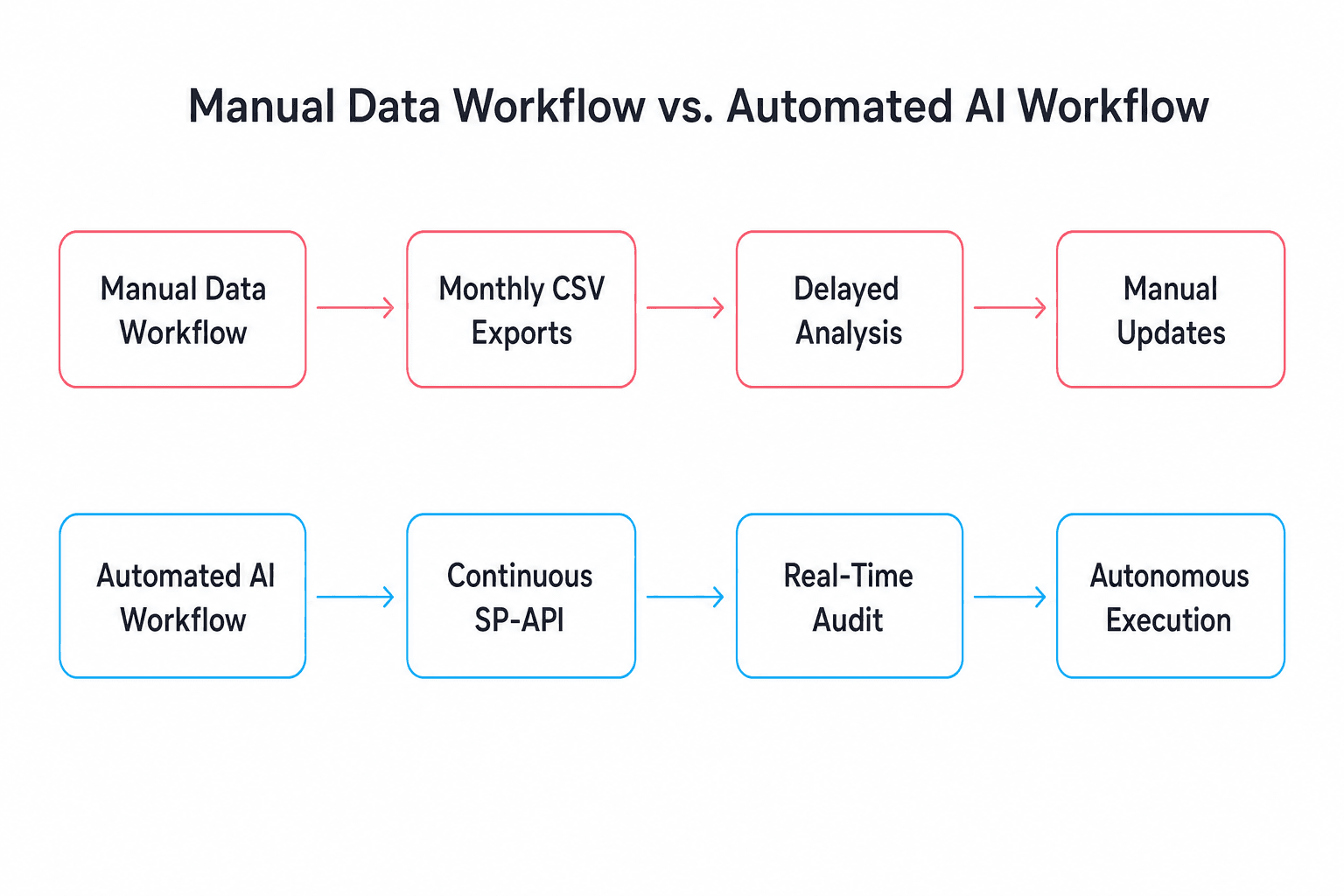
Official Amazon data shows more than 400,000 sellers globally have used its generative AI listing tools since their 2023 rollout. Amazon states that Premium A+ Content specifically can drive a sales lift of up to 20%, while Basic A+ Content sees closer to 8%.
Beyond content generation, machine learning models analyze complex logistics ledgers, adjust advertising bids in real time, and monitor customer sentiment patterns. Delegating routine data processing to automated software engines enables brands to minimize human error, respond instantly to competitive pricing moves, and focus internal resources on strategic catalog expansion.
What Are the Key AI Tools Driving Amazon Success in 2026?
The key AI tools driving Amazon success in 2026 include specialized autonomous operations agents, keyword research suites, retail media PPC managers, and algorithmic repricers.
Below is a detailed analysis of the essential software tools every Amazon brand should evaluate for its operational stack. Tools below are ordered by operational scope rather than price or market share. Lumian Technologies, which publishes this guide, also builds Lumian Agent.
1. Lumian Agent (Autonomous Back-Office Operations & Account Protection)
Lumian Agent is an autonomous operational assistant that connects to Amazon Seller Central via official Selling Partner API protocols, executing daily tasks including account health monitoring, multi-language buyer message triaging, and FBA reimbursement auditing.
Key Functionalities: Features a tiered "Daily Smoke Alarm" that alerts teams to urgent compliance risks via Slack or email; generates policy-compliant customer service draft replies; and cross-references inventory ledgers to build verified dispute packages for lost or damaged FBA stock.
Best For: Mid-market and enterprise brands looking to eliminate operational busywork, protect account health 24/7, and recover missing FBA capital without increasing headcount.
2. Helium 10 (Search Mining & Listing Optimization)
Helium 10 remains an essential platform for keyword research, search term indexation tracking, and competitive analysis. Its AI-powered Listing Builder helps sellers optimize product copy by analyzing top-ranking competitor ASINs and mapping keyword density before publishing changes.
Key Functionalities: Reverse ASIN lookups, historical search volume tracking, keyword indexation checks, and automated listing optimization scoring.
Best For: Brand managers focused on search engine optimization, initial catalog setup, and competitive keyword gap analysis.
3. Perpetua (Programmatic PPC & Retail Media Automation)
Perpetua provides a programmatic media management engine engineered to optimize Amazon PPC and DSP campaigns. Operators set target Advertising Cost of Sale (ACoS) or Total Advertising Cost of Sale (TACoS) goals, and the software's algorithms dynamically adjust keyword bids across Sponsored Products, Sponsored Brands, and Sponsored Display.
Key Functionalities: Goal-based campaign creation, automated keyword harvesting, programmatic bid adjustments, and integrated video ad generation tools.
Best For: Growing brands with substantial monthly advertising spend seeking hands-off, algorithmic bid management.
4. CopyMonkey (Specialized Product Copywriting)
CopyMonkey utilizes natural language generation models to draft search-optimized copy for e-commerce listings. The tool analyzes customer search query data to place critical keywords systematically within titles, bullet points, and description fields.
Key Functionalities: Bulk text generation for multi-variant catalogs, built-in keyword density verification, and localized translation support.
Best For: Private-label brands expanding large catalogs quickly that need rapid, search-friendly product descriptions.
5. SellerSnap (Algorithmic Repricing & Buy Box Optimization)
SellerSnap leverages game-theory algorithms to manage pricing dynamically on shared product listings. The platform evaluates competitor behavior patterns every few minutes to secure Featured Offer (Buy Box) placement while protecting defined minimum profit floors.
Key Functionalities: Game-theory repricing algorithms, automated price parity monitoring, and SKU-level profitability tracking.
Best For: Wholesale sellers and distributors competing on shared ASINs where winning the Buy Box is the primary sales driver.
6. Amazon Native AI Features (Project Amelia & AI Studio)
Amazon provides built-in artificial intelligence features directly within the Seller Central dashboard. Project Amelia acts as a conversational assistant that pulls performance metrics to answer operational questions, while AI Studio offers automated text generation and creative media tools.
Key Functionalities: Built-in account summaries, basic product description updates, and automated image and video ad generation.
Best For: Early-stage sellers looking for free, native tools to generate basic listing assets without managing third-party software subscriptions.
Tool | Core Function | Best For |
Lumian Agent | Autonomous back-office ops, account health, FBA reimbursements | Mid-market/enterprise wanting operations automated end to end |
Helium 10 | Keyword research, listing optimization scoring | Search-focused catalog setup and competitive analysis |
Perpetua | Programmatic PPC/DSP bid management | Brands with substantial ad spend wanting hands-off bidding |
CopyMonkey | AI-generated listing copy at scale | Large catalogs needing fast, search-optimized copy |
SellerSnap | Game-theory repricing, Buy Box optimization | Wholesale/shared-ASIN sellers competing on price |
Amazon Native AI (Amelia/AI Studio) | Built-in dashboard assistant + basic content generation | Early-stage sellers wanting free, native tools |
How Are Real-World Sellers Implementing AI Strategies?
Real-world Amazon sellers implement AI strategies by deploying integrated tool stacks that automate routine back-office tasks while reserving human operator oversight for strategic decision-making.
Consider the case of an expanding private-label home goods brand managing 120 active product variants across multiple regional fulfillment centers. Before automating their administrative workflows, the company spent over 60 hours per week handling manual operations, including checking for listing suppressions, responding to weekend buyer messages, and manually cross-referencing FBA inventory ledger files.
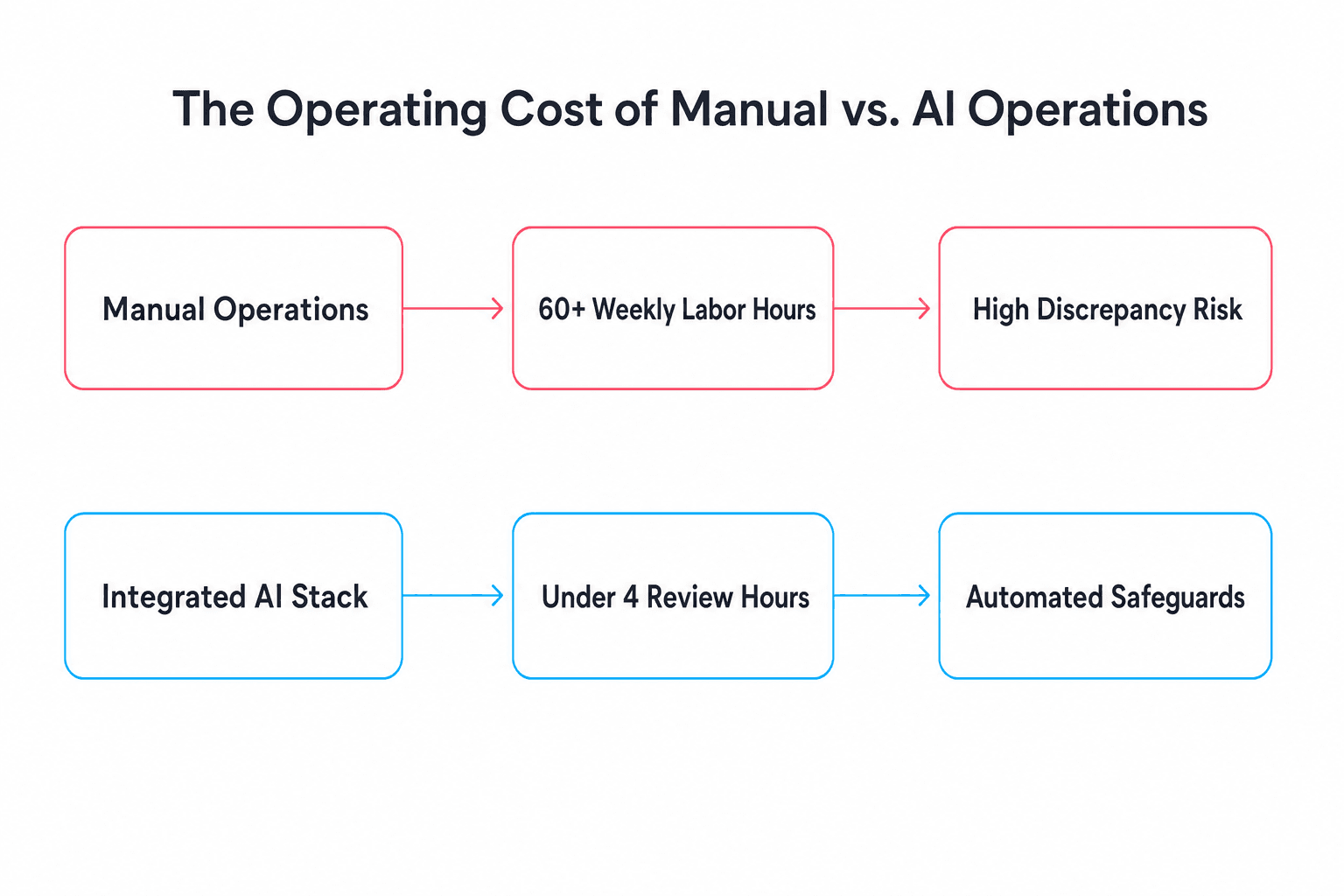
By deploying a connected software stack, the brand transformed its daily operations:
Account Protection: An autonomous operations assistant checked listing status hourly, alerting the team immediately when a primary image glitch triggered a temporary search suppression.
Customer Communications: The system triaged incoming buyer messages, generating policy-compliant draft responses that reduced average response times to under two hours without weekend manual labor.
Financial Recovery: Automated ledger auditing identified inbound receiving shortages, compiling verified dispute packages that allowed the team to recover eligible capital before the mandatory 60-day filing window expired.
This combination of specialized AI tools allowed the brand to reduce weekly administrative management time to under four hours of human review, enabling the team to focus on new product launches and brand marketing.
Actionable Checklist: Evaluating Your E-Commerce AI Stack
Evaluating your e-commerce AI stack requires auditing current administrative bottlenecks, verifying SP-API security protocols, and checking for margin-focused automation rules.
Use this checklist to assess your current tool suite and plan future software integrations:
[ ] Direct API Integration: Does every connected tool use official Amazon Selling Partner API protocols rather than insecure browser scraping or password sharing?
[ ] Data Isolation: Does the software provider guarantee isolated data environments that never share or aggregate your store metrics?
[ ] Operational Scope: Does your software stack cover all primary operational areas, including keyword research, PPC management, listing creation, and back-office protection?
[ ] Automated Alerts: Can your tools deliver real-time risk alerts directly to your team's communication channels, such as Slack or corporate email?
[ ] Human-in-the-Loop Controls: Does the software allow human operators to review and approve critical actions, such as customer replies or price changes, before execution?
[ ] Inventory-Aware Bidding: Do your advertising tools automatically reduce ad spend on low-stock items to prevent unexpected stockouts?
[ ] Reimbursement Compliance: Does your financial recovery tool build verified dispute packages for human review rather than submitting automated spam cases?
[ ] Multi-Language Support: Can your tools manage localized listing translation and message triaging across international Amazon stores?
[ ] Profitability Focus: Does your software stack track Total Advertising Cost of Sale (TACoS) and net contribution margins rather than isolated top-line sales figures?
[ ] Total Cost Alignment: Are your monthly software subscription costs fully offset by labor savings and recovered capital?
Conclusion
Integrating artificial intelligence tools into your Amazon business strategy is essential for navigating the modern e-commerce landscape. By automating product listing optimization, retail media bidding, and back-office account protection, brands can reduce operational overhead, maintain account compliance, and protect baseline contribution margins. The tools above cover different parts of the stack — listing, PPC, repricing, and back-office operations. Lumian Agent is built to unify store administration with account health and inventory — see how it works.
Frequently Asked Questions
What are the top AI tools every Amazon seller needs in 2026?
The right tools depend on your operational bottlenecks. Lumian Agent handles autonomous back-office operations and account health; Helium 10 covers search term research; Perpetua manages programmatic PPC bidding; SellerSnap handles algorithmic repricing.
How do AI tools improve product listing optimization?
AI tools improve listing optimization by analyzing high-converting competitor titles, mapping keyword density, and evaluating Search Query Performance data. They rewrite titles, bullet points, and backend search terms to maximize search indexation while maintaining a natural, brand-aligned tone.
Is it safe to connect third-party AI tools to Amazon Seller Central?
Third-party AI tools are safe to connect when they use official Amazon Selling Partner API protocols, letting you manage data permissions and revoke access anytime through Seller Central. Avoid any software that asks for your account password directly.
Can AI software help recover missing money from FBA warehouse errors?
Automated tools audit inventory ledger reports, receiving logs, and return files via the SP-API, and compile verified dispute packages for discrepancies like lost stock or receiving shortages — all within Amazon's mandatory 60-day filing window.
What is the difference between an analytics tool and an autonomous AI agent?
An analytics tool collects data and displays metrics on visual dashboards, requiring a human operator to interpret the charts and execute updates manually. An autonomous AI agent connects directly to live data feeds, monitors account health continuously in the background, and executes multi-step workflows independently.

Co-Founder & CEO, Lumian
Robin Lobo is Co-Founder and CEO of Lumian. He built and sold a seven-figure eyeglasses brand on Amazon and spent several years on the client side of traditional agencies before founding Lumian, an AI-native Amazon agency backed by $3M led by Bowery Capital.