Which Amazon Management Functions Should a Brand Outsource First as It Scales?
Discover which Amazon management functions brands should outsource first as they scale, from PPC ad management to listing optimization and FBA inventory forecasting.
TL;DR
What to Expect:
A strategic breakdown of how expanding e-commerce brands should prioritize outsourcing Amazon management tasks, balancing operational bandwidth, execution velocity, and capital efficiency.
Key Takeaways:
High-Velocity PPC Execution: Paid advertising and keyword bid adjustments require continuous, 24/7 optimization that quickly exhausts in-house capacity.
Listing Optimization and A+ Content: Conversion rate optimization requires specialized creative, A/B testing, and SEO skill sets that are more cost-effective to outsource.
Supply Chain and Inventory Forecasting: Preventing stockouts and managing FBA replenishment schedules require advanced predictive analytics to protect organic search rank.
Account Health and Compliance: Managing catalog suppressions, policy flags, and Buy Box ownership demands dedicated, specialized monitoring.
The Hybrid Solution: Modern brands achieve optimal results by pairing autonomous AI execution tools with expert human strategic oversight.
Intro
Scaling an e-commerce brand on Amazon is a complex balancing act. As order volume grows, the operational burden expands exponentially. Founders and brand managers quickly find themselves trapped in a cycle of adjusting keyword bids, troubleshooting listing suppressions, monitoring stock levels, and responding to customer inquiries.
Attempting to keep every operational function in-house often leads to execution bottlenecks. Internal teams become stretched thin across tactical tasks, leaving little time for high-level product development, brand strategy, or channel expansion. To maintain revenue velocity, growing brands must identify which functions to delegate first.
Understanding the order in which to outsource operations allows brand leaders to preserve working capital while maximizing marketplace performance.
1. Amazon PPC and Advertising Management
Paid advertising is typically the first function brands should delegate or automate. Managing Amazon Sponsored Products, Sponsored Brands, and Sponsored Display campaigns requires continuous data processing and real-time bid adjustments.
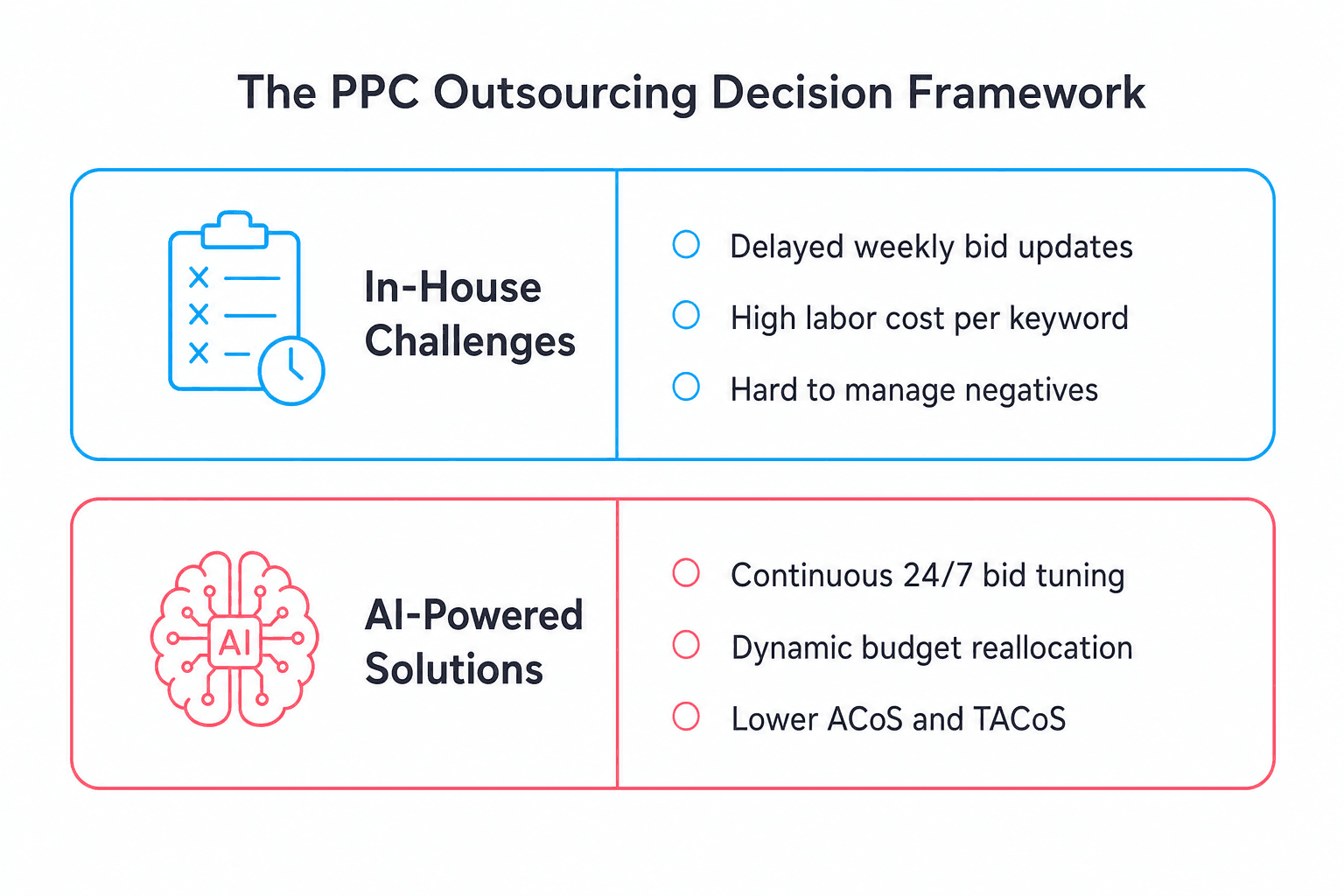
Manual bid management is notoriously inefficient. A brand manager overseeing a growing catalog must manually review search term reports, identify non-converting keywords, adjust bids across placement types, and manage dayparting schedules.
According to Feedvisor benchmarking data cited by Amra & Elma, Amazon's average ad conversion rate reached 12.3% in 2026 though estimates vary across sources, with several agencies reporting averages closer to 8-12%. External specialists and automated platforms process search term conversion probabilities continuously, ensuring ad spend is directed toward high-intent shoppers.
By delegating advertising execution to specialized partners or platforms utilizing Lumian AI's Amazon management solutions, brands can achieve a lower Advertising Cost of Sales (ACoS) while freeing internal teams to focus on brand building.
2. Listing Optimization, A+ Content, and Creative Production
Traffic acquisition delivers minimal value if product detail pages fail to convert incoming shoppers. Conversion rate optimization (CRO) on Amazon requires a combination of technical search engine optimization, persuasive copywriting, graphic design, and 3D rendering.
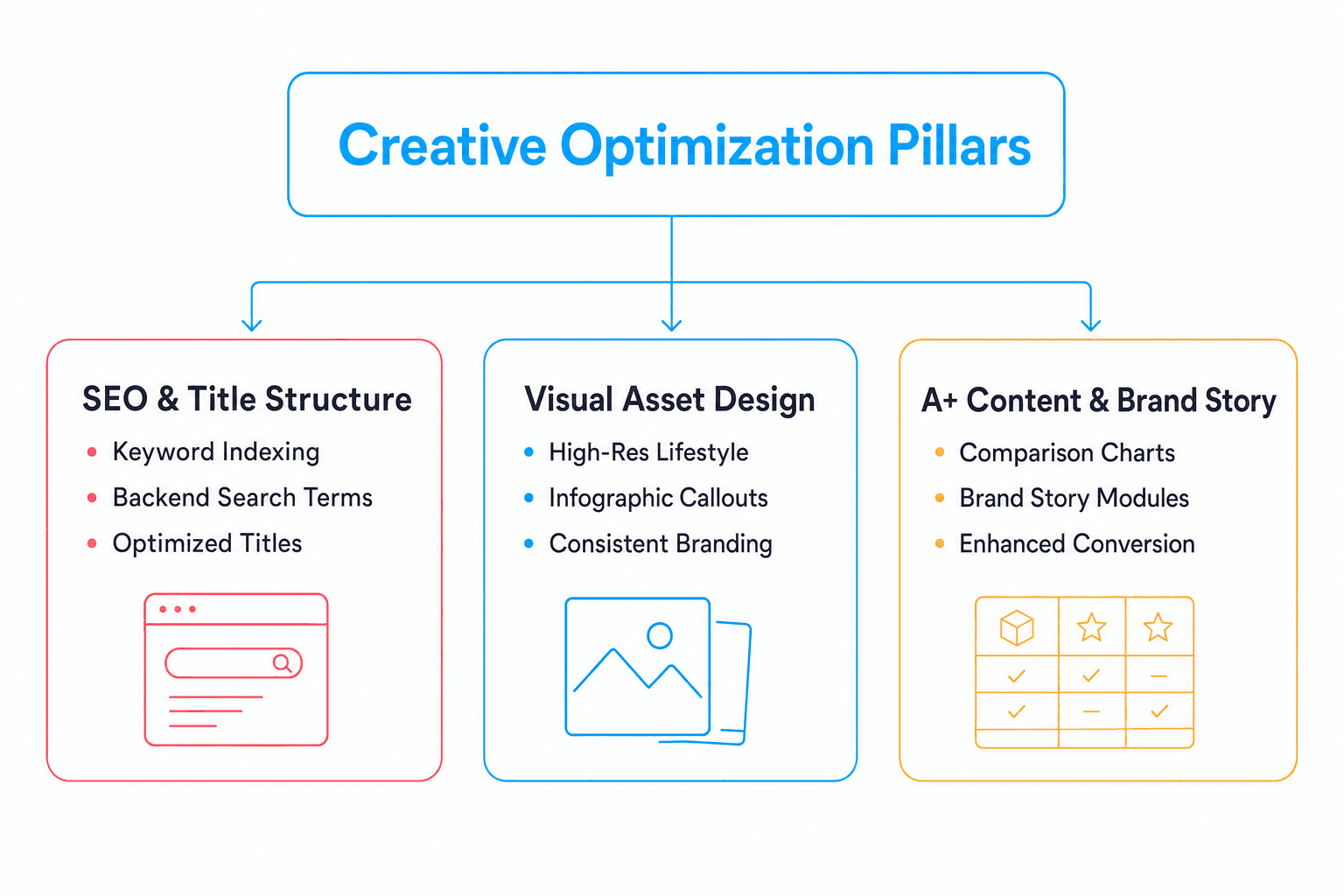
Building a full-time in-house team consisting of an Amazon copywriter, a graphic designer, and an A/B testing specialist is often financially impractical for mid-market brands. Category research published by Seller Sprite on Amazon conversion rate benchmarks shows that average conversion rates vary between 3% and 10% across standard categories, with top-performing optimized listings achieving conversion rates above 15%.
Outsourcing creative production provides immediate access to specialized talent experienced in Amazon style guides and mobile layout optimization. External teams run systematic experiments on main images, title structures, and comparison charts to improve Unit Session Percentage without inflating internal payroll.
3. Inventory Forecasting and FBA Supply Chain Operations
Running out of stock on Amazon carries heavy penalties. When an ASIN runs out of stock, its listing loses Buy Box eligibility, organic keyword ranks drop rapidly, and historical ad relevance deteriorates. Once inventory is replenished, brands are often forced to re-spend heavily on PPC campaigns just to regain lost organic visibility.
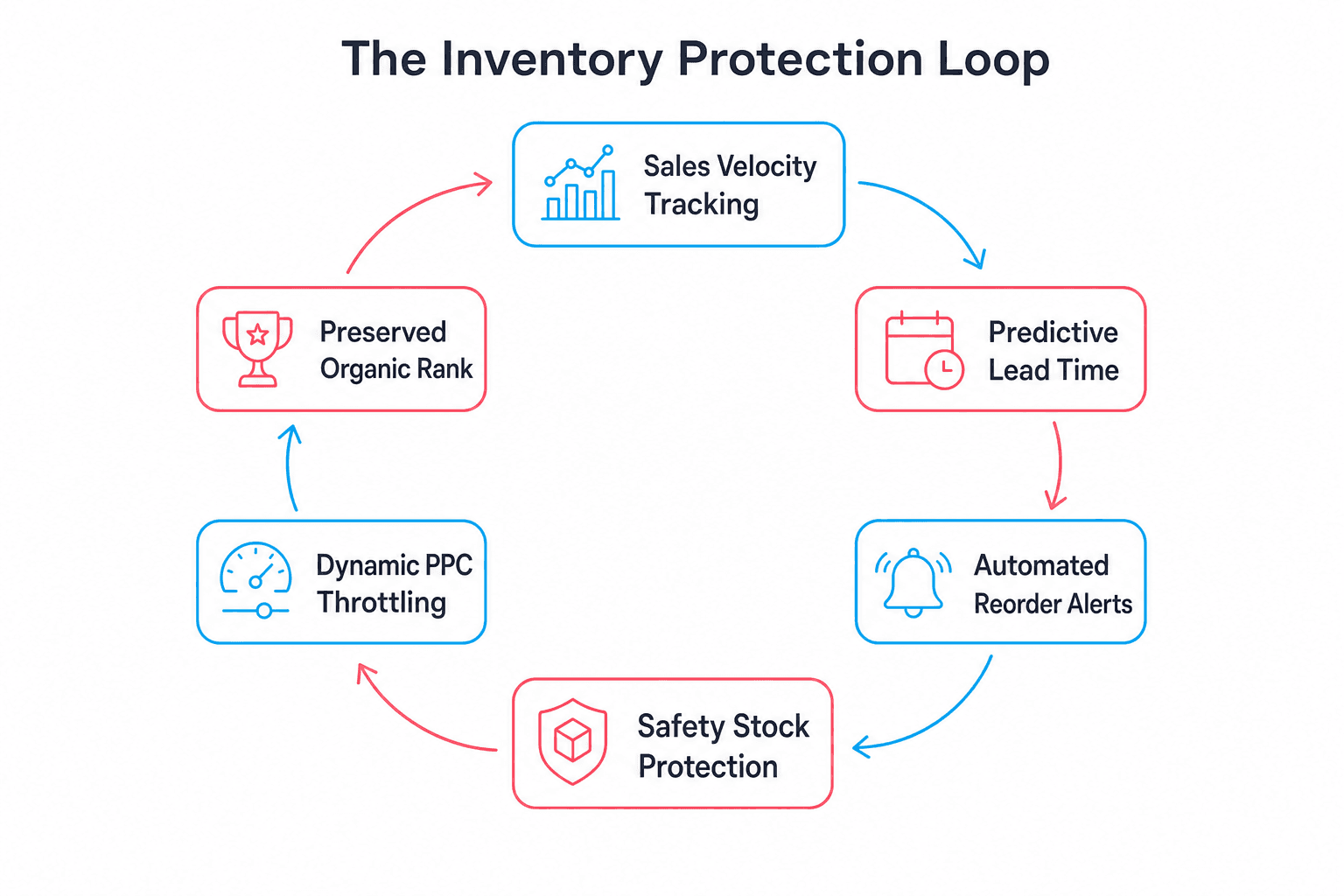
Managing Fulfillment by Amazon (FBA) inventory requires balancing multiple variables:
Historical Sales Velocity: Factoring in seasonal demand surges and promotional spikes.
Inbound Lead Times: Accounting for manufacturing duration, ocean freight transit, and Amazon fulfillment center check-in delays.
Storage Fee Optimization: Avoiding aged inventory surcharges and overage fees while maintaining adequate safety stock.
Outsourcing inventory modeling or deploying predictive monitoring platforms connects ad velocity with warehouse supply. Integrating inventory data with ad execution allows systems to throttle PPC spend when stock drops below critical levels, preserving inventory for organic sales.
4. Catalog Health, Compliance, and Account Defense
As order volumes grow, catalog maintenance becomes increasingly complex. Brands frequently face unauthorized sellers, listing suppressions, unannounced content overrides, and category misclassifications.
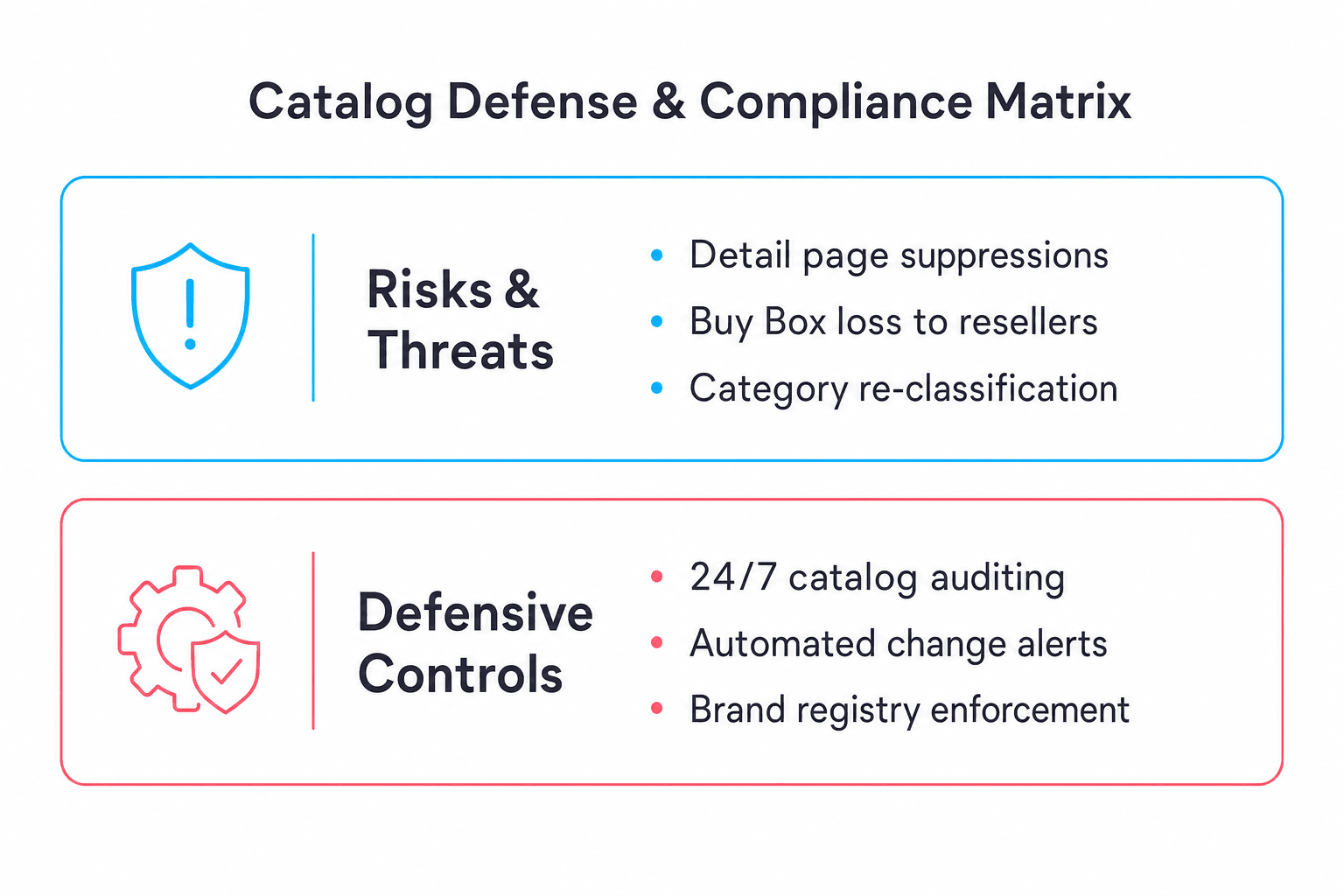
Resolving Seller Central compliance issues requires detailed knowledge of Amazon policy documentation and flat-file uploads. Internal staff often waste hours attempting to resolve seller support cases through generic ticket queues.
Specialized agency partners and automated monitoring services monitor catalog health continuously. By detecting title truncations or policy flags in real time, external experts resolve suppressions before they impact overall sales momentum. Reviewing real-world case studies on Lumian AI's platform capabilities illustrates how proactive catalog auditing preserves revenue stability.
Evaluating the Matrix: What to Keep In-House vs. What to Outsource
Deciding which functions to delegate requires evaluating tasks based on strategic importance and operational complexity.
Management Function | In-House Responsibility | Best Outsourced / Automated | Primary Benefit |
Product Development | Core responsibility | Rare | Preserves brand equity and product vision |
PPC Ad Optimization | Setting growth targets | Primary candidate | Continuous 24/7 bid tuning & lower ACoS |
Creative & Copywriting | Brand voice guidelines | High candidate | Higher conversion rates via specialized CRO |
Supply Chain Planning | Supplier relations | High candidate | Reduced stockout occurrences & storage fees |
Catalog Defense | Final escalation sign-off | Primary candidate | Rapid resolution of suppressions & policy flags |
Focusing internal energy on core competencies like product innovation, margin management, and overall channel expansion yields the highest return on leadership time.
Strategic Implementation: The Hybrid Agency Approach
Choosing an execution model is no longer a simple binary decision between hiring a traditional agency or purchasing software tools. Modern brands benefit most from a hybrid approach that pairs specialized autonomous agents with dedicated e-commerce strategists.
In a hybrid execution framework:
AI Agents Handle Execution Velocity: Software bots handle continuous PPC bid adjustments, listing suppression monitoring, and inventory velocity calculations around the clock.
Human Strategists Provide Governance: Senior e-commerce specialists set business boundaries, review high-impact recommendations, and ensure account changes align with broader brand goals.
To learn how an AI-powered hybrid management model can scale your marketplace operations while protecting brand margins, explore the solutions available through Lumian AI or schedule a consultation with an e-commerce specialist.
Frequently Asked Questions
Which Amazon management function should a brand outsource first?
PPC advertising and campaign management is typically the first function to outsource or automate. Managing keyword bids, search term harvesting, and dayparting manually requires significant labor and often yields slower optimization cycles compared to algorithmic execution.
Is it better to hire an agency or use automated software for Amazon PPC?
A hybrid approach combining both yields the best results. Pure software tools lack human strategic context, while traditional agencies can suffer from manual bandwidth limits. Combining automated execution agents with human strategist governance delivers speed and strategic alignment.
How does outsourcing listing optimization improve sales performance?
Specialized creative teams bring expertise in Amazon SEO, visual hierarchy, and mobile layout optimization. By systematically testing main images, title structures, and A+ Content modules, external teams improve listing conversion rates (CVR) and maximize return on ad spend.
What are the risks of keeping Amazon inventory forecasting entirely in-house?
In-house teams using static spreadsheets often struggle to account for sudden ad velocity spikes or shipping lead time variations. This can lead to unexpected stockouts, which lower organic keyword ranks and damage overall account profitability.
What core functions should a brand always keep in-house?
Core business functions - such as new product development, supplier negotiation, brand strategy, and high-level financial planning - should remain in-house to preserve long-term brand equity and margin control.